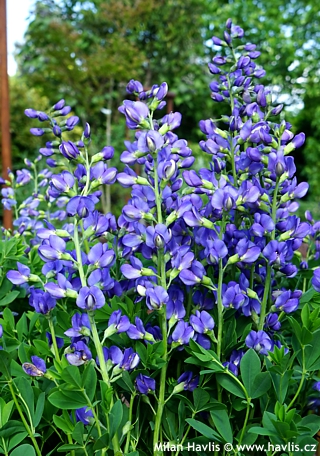











Baptisia 'SPARKLING SAPPHIRES' false indigo

 Symbivit Tric (arbuscular)
 Symbivit (arbuscular)
Baptisia
Baptisia is an old North American genus with roughly 30 species, ranging from dry prairies to bright woodland edges in the eastern and south‑eastern United States. It was formally established by �tienne Pierre Ventenat (1757�1808) in 1808, although its history is more tangled: earlier authors alternated between placing it in Podalyria, Sophora or Ripasia, reflecting the uncertainties within the Fabaceae family at the time and its similarity to other papilionaceous plants. These are robust perennials with deep root systems that anchor them even in extreme drought, while their peculiar chemical trait � the blackening of tissues when injured � recalls their former use in dyeing and folk medicine. This is also reflected in their scientific name, since the Greek bapto means to dip; several species were used as substitutes for true indigo, hence its American common name False indigo. The natural species differ in flower colour and ecology, but all share a firm, almost shrub‑like habit and the ability to form substantial clumps that act as surprising anchors of vegetation in dry prairie landscapes.
Hybridisation in Baptisia began quietly: in nature, blue‑flowered species such as B. australis occasionally crossed with yellow ones like B. sphaerocarpa and B. tinctoria, showing that the combination of anthocyanins and carotenoids can produce new shades. Modern breeding relies mainly on several species that appear in the literature as parents of described hybrids: B. australis for its strong habit and blue pigments, B. tinctoria and B. sphaerocarpa for yellow tones and resilience, B. alba as a stabilising element with pure white flowers, and B. minor for compact habit, lower growth and rich blue pigment. A real breakthrough came in the United States at the turn of the twentieth and twenty‑first centuries, when Hans Hansen (born 1963) began, reportedly at first just for fun, collecting seed in Texas and Oklahoma and crossing the plants. The results surprised him so much that he started breeding Baptisia systematically, crossing species across the sections of the genus and creating the Prairieblues� and later the Decadence� series, which defined the modern form of Baptisia with strong stems, large inflorescences, new colour combinations and improved garden performance. At the same time Tony Avent (born 1956) of Plant Delights Nursery in North Carolina gathered natural forms, especially B. arachnifera with its silvery foliage, and his selection work broadened the genetic base from which today�s breeders draw. His collection now includes at least twenty‑five cultivars that he has tested over many years in different climatic conditions. Hybrids develop slowly because Baptisia plants take several years to grow and flower, but once established they form long‑lived clumps that act as stable, almost maintenance‑free dominants in the garden.
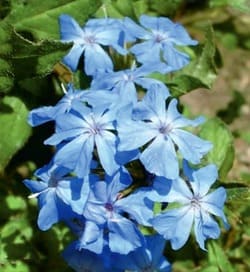
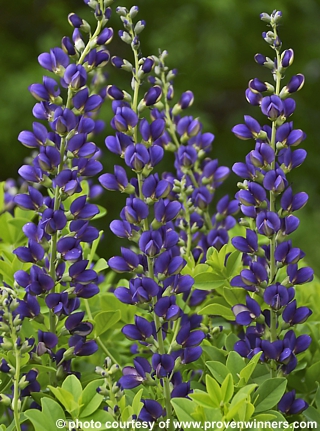
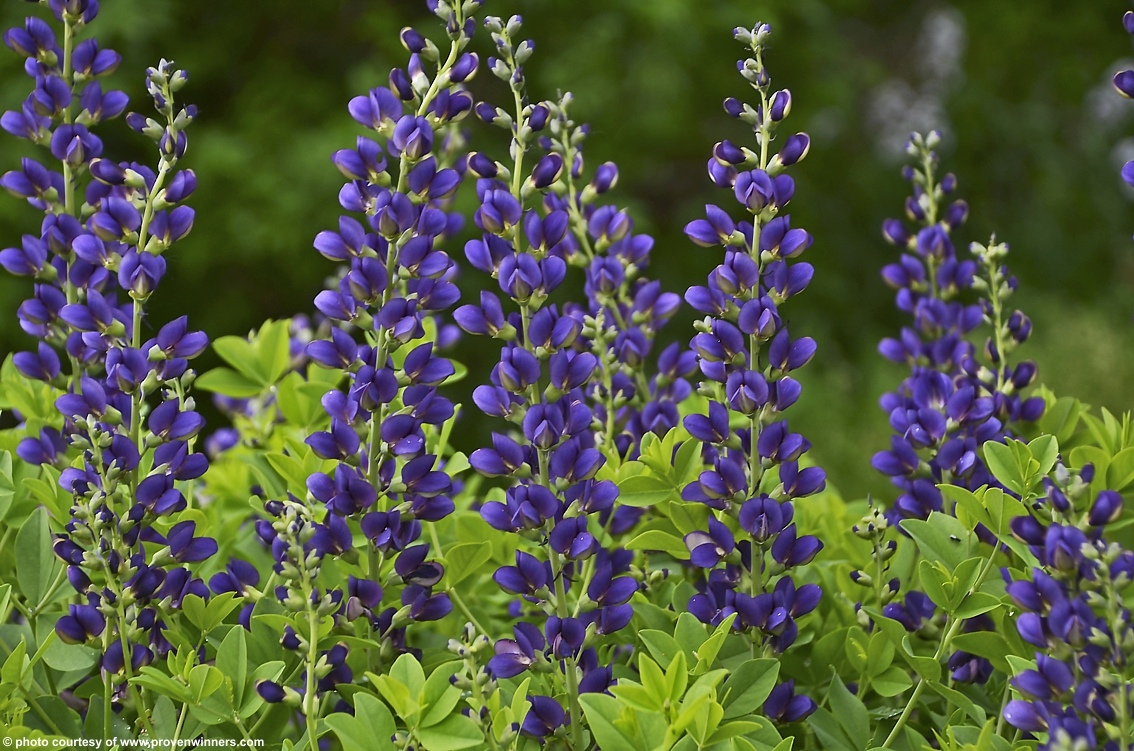
Sparkling Sapphires is compact baptisia hybrid from Hans Andrew Hansen from Walters Gardens Inc., Michigan, USA with a tasty name. It is a cross between b. sphearocarpa �Linda� and b. minor. It produces up to 30 cm long, erect racemes composed of deep indigo blue pea-like flowers which attract butterflies.
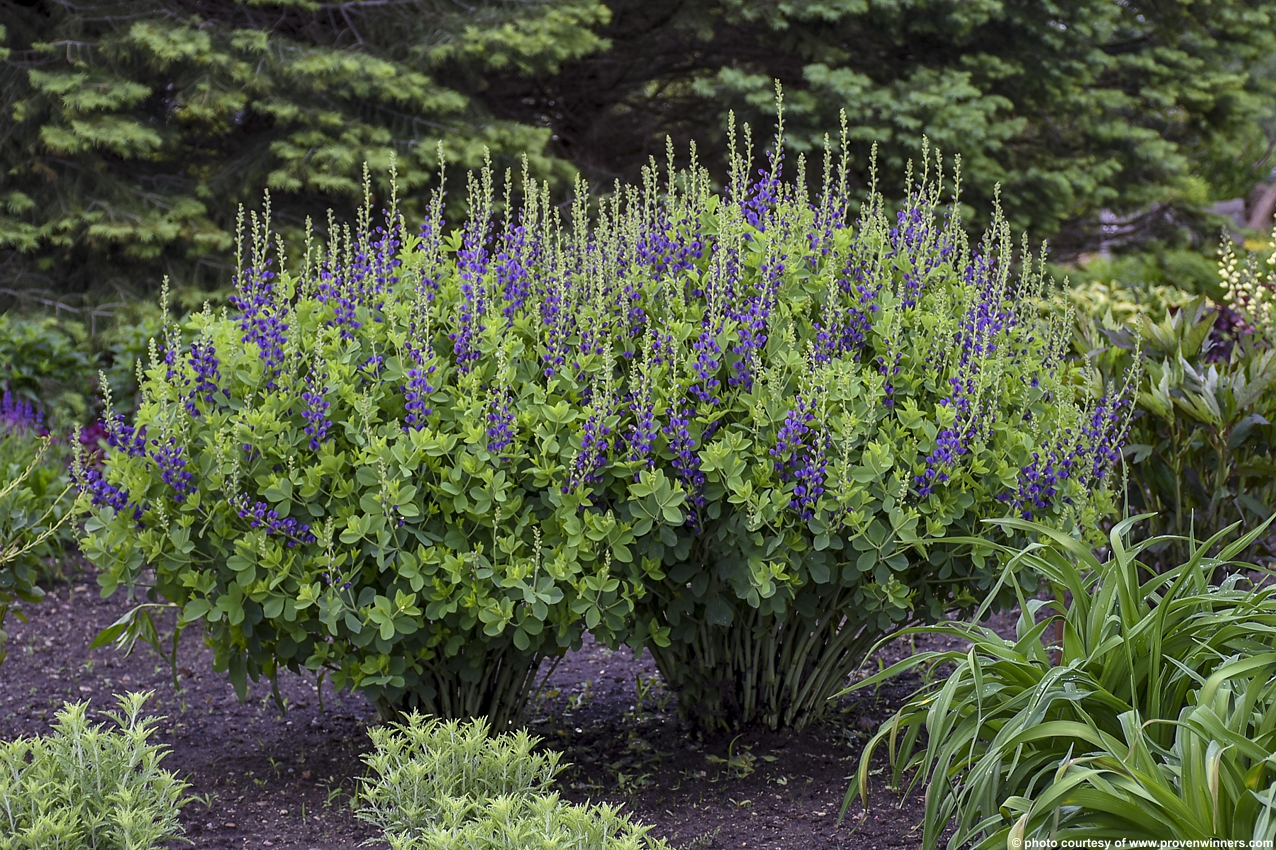
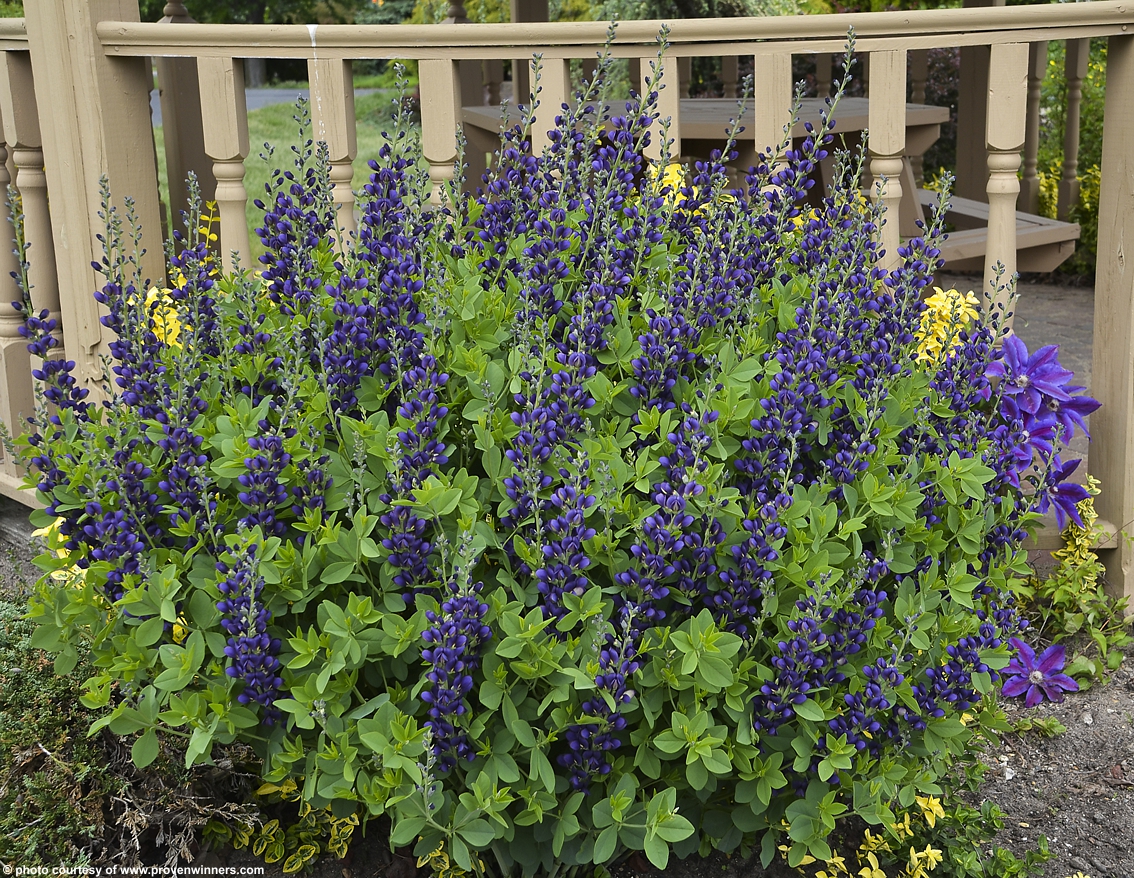
It forms rather rounded, dense clumps with many stems reaching about 80 cm tall. Its palmate leaves are divided into 3 ovate, medium green leaflets. Patent No. PP27904 was granted in 2017.
False indigo has just one disadvantage � it is extremely slow to establish hence its high retail price. But once it does it multiplies the number of stems year after year and makes almost a shrub-like appearance owing to which it is often used as a companion plant among non-flowering shrubs and small trees. It was voted Perennial of the Year 2019 by the Czech Perennial Association.
Last update 05-04-2021
Baptisia requires patience: during the first two or three years after planting it grows slowly because it invests energy in its deep root system. This slow start is also the reason why its retail price is often higher than that of common perennials; it simply takes longer to produce a plant strong enough for planting. Once established, however, Baptisia becomes an exceptionally stable and long‑lived perennial that forms increasingly substantial clumps resembling small shrubs, which is why it was chosen as the Perennial of the Year 2019 by the Czech Perennial Growers� Association. It needs full sun, well‑drained and rather poor soil, and it dislikes waterlogging; it responds very well to heat and drought. Watering is required only in the first year after planting, and later it is almost maintenance‑free. Fertilising is unnecessary and on overly rich soils it may even grow weaker. Pruning is done in spring when the dry stems are removed; for a cleaner appearance though you can cut it back by about half after flowering so that it does not waste energy on seed production and forms a smaller but freshly leafy clump. Baptisia does not tolerate transplanting and often stagnates for several years afterwards. Pests rarely attack it and diseases appear only occasionally. Thanks to its firm structure and deep roots it withstands wind and summer heat well and is fully hardy to at least -34 �C (USDA zone 4).