










Brunnera macrophylla 'LOOKING GLASS' brunnera, Siberian bugloss

 Symbivit Tric (arbuscular)
 Symbivit (arbuscular)
Brunnera
The genus Brunnera belongs to the borage family and comprises only three species that occur naturally in the Caucasus, northern Turkey, northern Iran and marginally in eastern Europe. For a long time, botanists confused it with the genera Anchusa and Myosotis, as its delicate spring flowers resemble forget‑me‑nots and the leaves of some species are similar in shape to other members of the borage family. It was not until the 19th century that the genus was firmly established through the work of the Swiss botanist Samuel Brunner (1790�1844), after whom it is named. Brunneras are characteristic for their ability to thrive in cool, moist woodlands, forming clumps of foliage that later became the foundation of modern ornamental cultivars. Fossil records of the genus are not known, but historical herbarium collections show that the plants were gathered during early expeditions to the Caucasus, where they became a favoured subject of botanical travellers. Today, the genus is valued for its longevity, resilience, striking foliage and abundant flowering.
Brunnera macrophylla, Siberian bugloss, originates from the woodlands of the Caucasus, where it appears after the spring thaw as one of the first green signs of the year. It began to be cultivated in Europe in the 19th century as a hardier alternative to the forget‑me‑not, since its flowers share the same gentle blue but the plant tolerates cold and moisture far better. In gardens it has earned a reputation as a dependable perennial that returns year after year without fuss, yet with the quiet assurance typical of plants perfectly adapted to their environment. It is sought after for its early spring bloom, low maintenance and ability to create calm, shaded corners that feel almost woodland‑like. In Russia and Georgia, it was traditionally planted near homes as a plant that �opens the season� and brings the first colour after a long winter. In modern horticulture it has become the basis of many cultivars, as its leaves offer ample room for breeding work with silver patterns, size and shape.
Looking Glass is an old term for mirror, an Italian invention from around 1300. It originated in Venice where transparent glass was coated a silvery mixture of mercury and tin on the reverse which gave an almost perfect reflection as expected from a glass designed to be looked at.
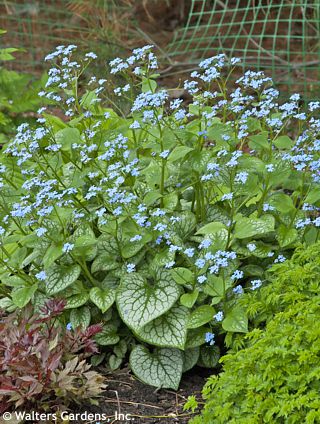
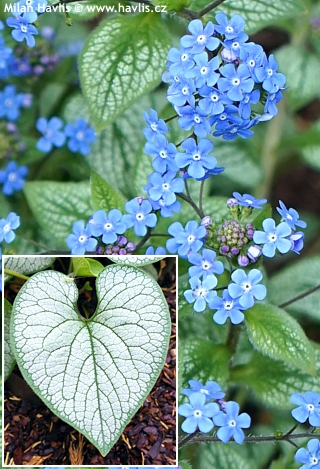
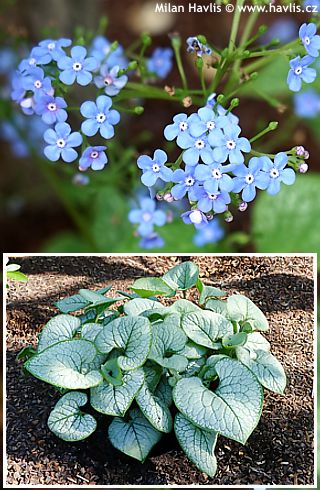
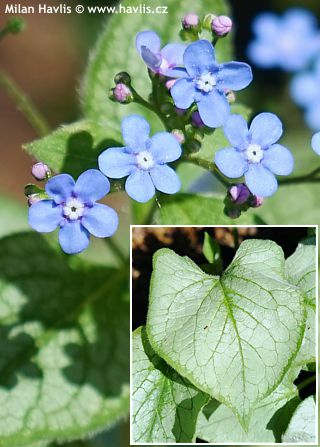
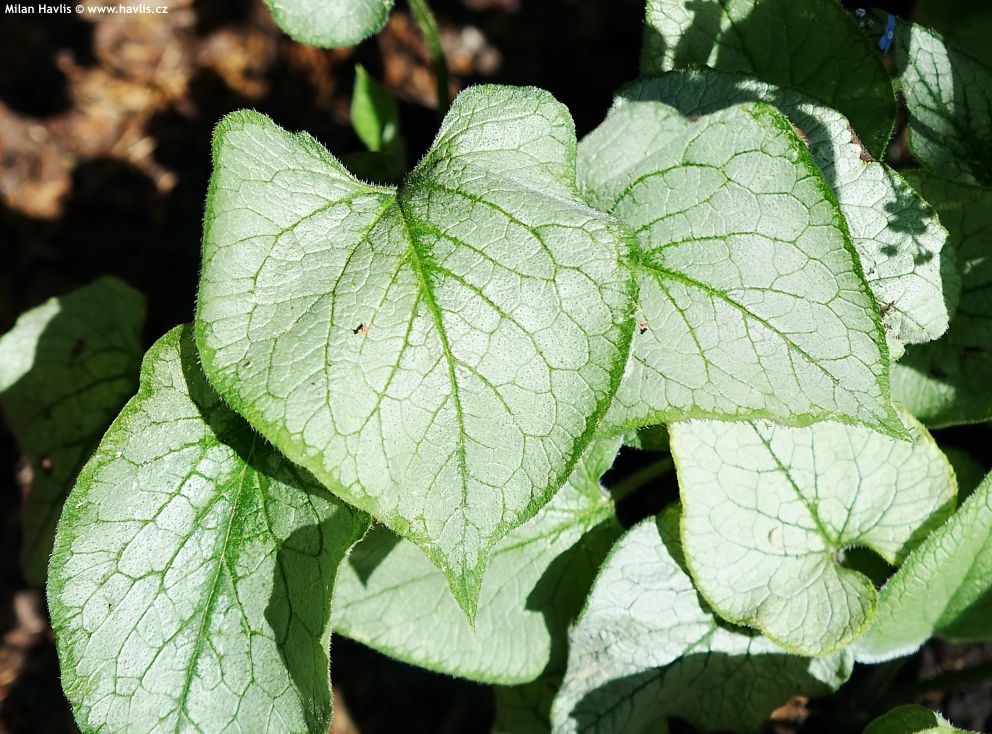
It is also a name for a Siberian bugloss variety found as a sport of Jack Frost variety in Walters Gardens, Zeeland, USA, in 2000. Its large, hairy, 12-15 cm long and wide leaves are almost completely silvery grey on the front giving an appearance of a heart-shaped mirror. Only midribs and margins are green.
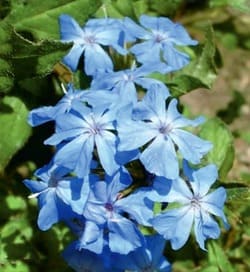
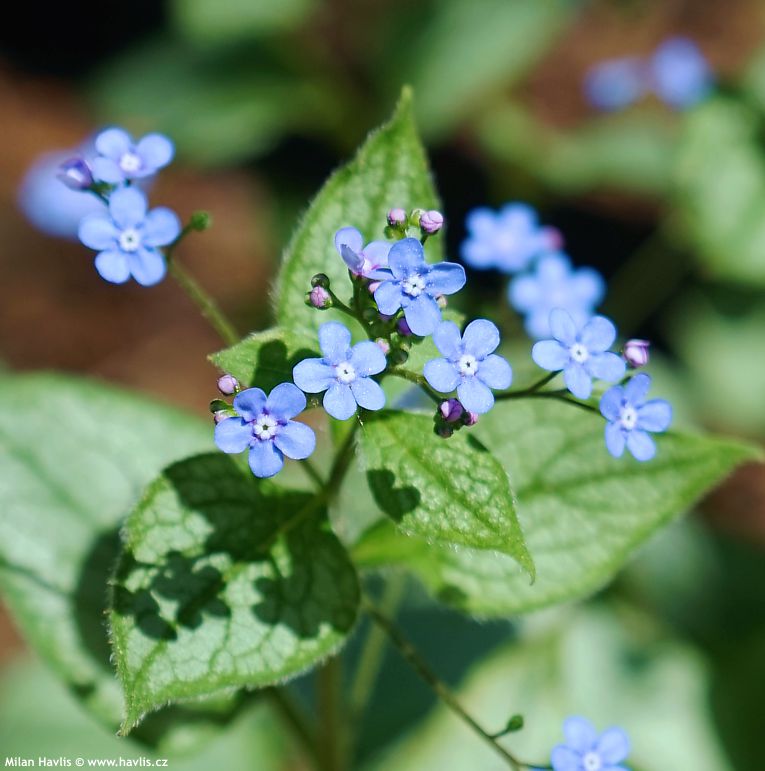
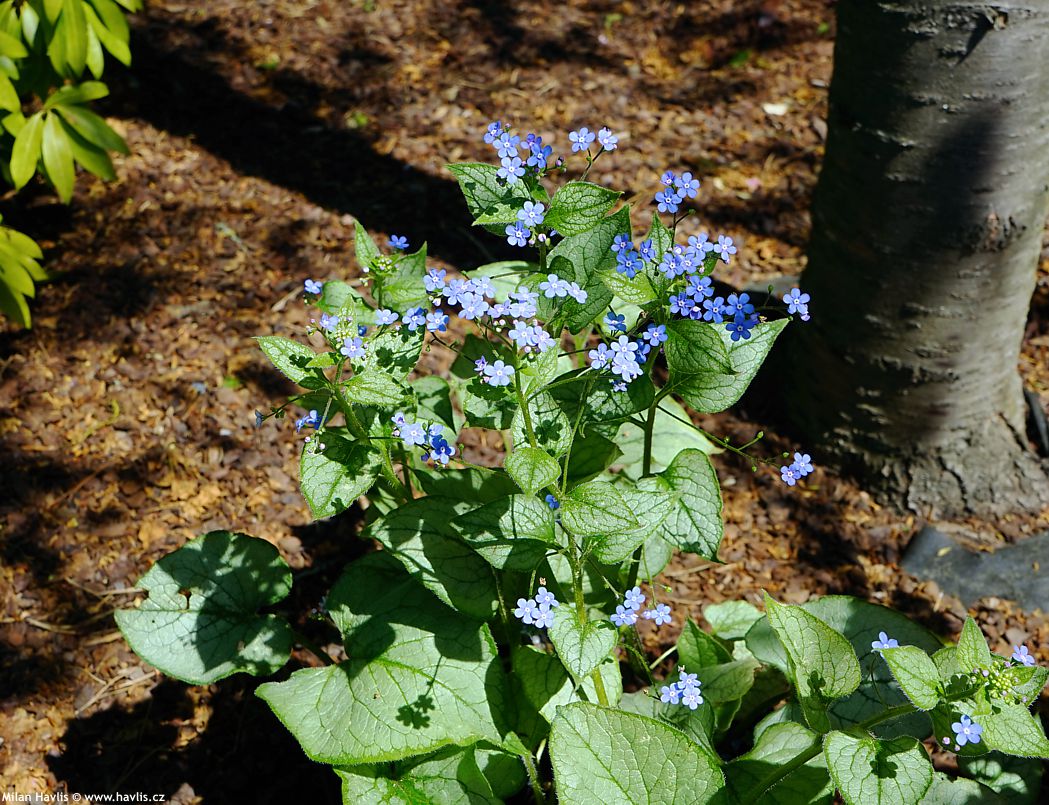
In mid spring, commonly late April in zone 6, appear small, sky blue, forget-me-not-like flowers on thin stems 30-40 cm tall, in thin, cyme-like panicles for almost two months. They look best in mass plantings and as the plant is a slow grower we suggest planting in densely, i.e., 5-6 plants per square meter. It is not invasive nor travels around the garden with runners nor seeds itself off. Patent No. PP17829 was granted in 2007.
Last update 30-01-2023
Brunnera macrophylla is a perennial that performs reliably in the garden as long as it receives what it get in the wild: cool partial shade, moist humus‑rich soil and a sheltered position away from strong winds. It thrives best beneath deciduous trees or on the north side of buildings, where the light is diffused and the soil does not dry out, yet it is true that it tolerates occasional drought better than, for example, hostas. The species and most cultivars dislike full sun, although some newer selections cope well even in open exposure. During prolonged summer droughts its broad leaves may show sunscorch, so watering needs to be monitored in hot seasons. The soil should be slightly acidic to neutral, rich in organic matter and kept evenly moist. One light application of compost or a gentle organic fertiliser in spring is sufficient; heavy doses of mineral fertilisers do not suit it. Pruning is not required, though removing spent flower stems after flowering and cutting away damaged leaves at the end of summer helps keep the plant tidy. It manages only short‑term cultivation in containers, as it needs stable moisture and a cooler root zone. Its frost hardiness is high, commonly withstanding winters down to −40 �C (USDA zone 3), and it is not poisonous. The leaves are coarse and can cause cuts, so gloves are recommended when handling the plant.