










Buddleja 'WISTERIA LANE' butterfly bush, buddleja

 Symbivit Tric (arbuscular)
 Symbivit (arbuscular)
Buddleja
The genus Buddleja, commonly known as butterfly bush, is a botanically diverse and geographically wide-ranging group of woody plants comprising more than 140 species distributed across Asia, Africa and both Americas. Having evolved on four continents, it shows remarkable variability, from small shrubs barely exceeding a metre in height to trees approaching thirty metres. Although now placed in the family Scrophulariaceae, its taxonomic history is complex � in the past it was assigned to Loganiaceae and even to its own family, Buddlejaceae, before modern systematics settled on the current concept. The genus was named by Carl Linnaeus (1707�1778) in honour of the English botanist Adam Buddle (1662�1715), following the recommendation of the physician and plant collector William Houstoun (1695�1733), who sent the first specimens of Buddleja americana from the Caribbean to England roughly fifteen years after Buddle�s death. Its ability to attract winged insects, especially butterflies, earned it the name �butterfly bush� in many languages during the twentieth century. Although no species is native to Europe, Buddleja has become one of the most widely grown ornamental shrubs here. The species differ not only in appearance but also in pollination strategy: American forms often developed long red flowers adapted to hummingbirds, whereas Asian species attract almost solely insects for which they have an abundance of nectar throughout the summer.
Hybrid butterfly bushes form a distinct chapter within the genus Buddleja, because breeders soon realised that several key species offer very different qualities which can be combined to create new and unique cultivars. The foundation of almost all modern hybrids is B. davidii, valued for its long flowering season, fast growth and broad colour range from pink through lavender and purple to white, yet criticised for its invasive behaviour, making it an ideal �carrier parent� whose strengths need to be refined. The second pillar of hybridisation is B. globosa, a South American species with spherical, honey‑scented flower heads in warm yellow and orange tones; it gave rise to the first interspecific hybrids, most notably Buddleja � weyeriana, bred around 1900 by Count van de Weyer in England. For a lighter habit and pastel colours, breeders turn to B. alternifolia, whose early flowering and arching branches lend hybrids a soft, almost watercolour quality. B. lindleyana contributes deep purplish to crimson shades and elegant, elongated panicles that enrich the darker end of the palette. And finally B. fallowiana, a species with densely felted, silvery leaves and cool blue‑violet flowers, is responsible for the silvery foliage of many modern hybrids � it is the parent behind the iconic leaf colour of cultivars such as �Silver Anniversary�.
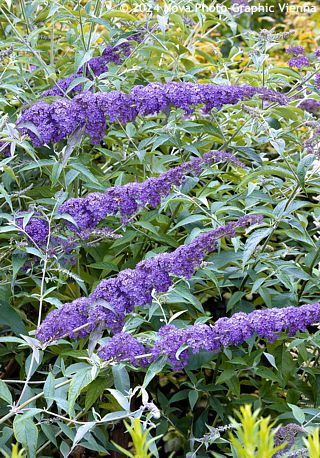
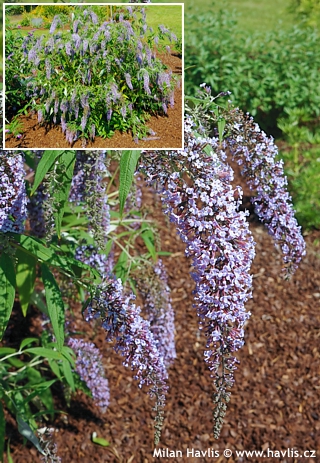
Wisteria Lane butterfly bush shares its name with the well‑known street from Desperate Housewives, where every time the camera shows the front of any house, a purple wisteria is in full bloom. Apparently even in winter. That�s the American miracle for you. But this time we are not talking about television culture; we are talking about a unique butterfly bush cultivar with drooping flower clusters that genuinely resemble wisteria racemes.
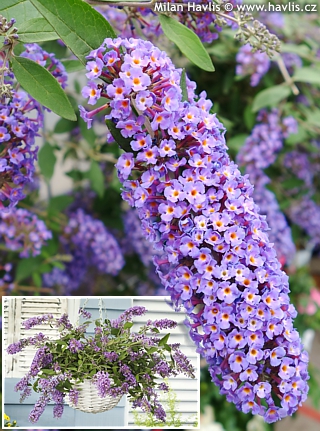
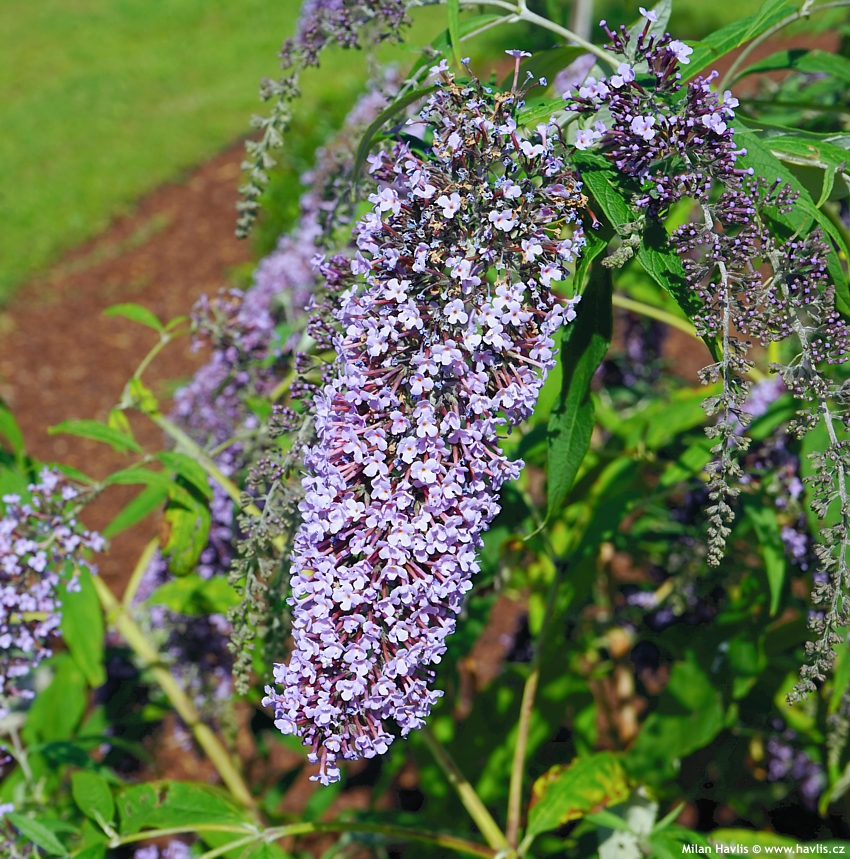
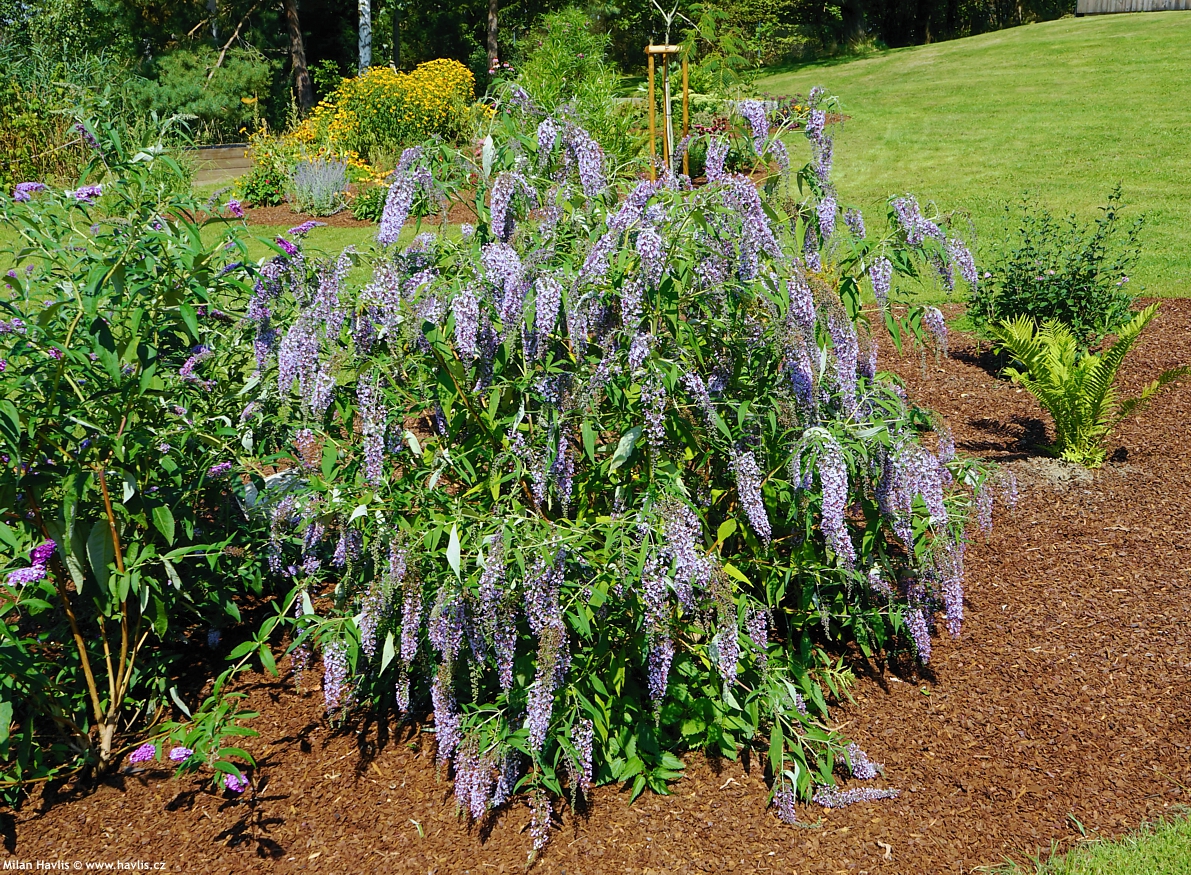
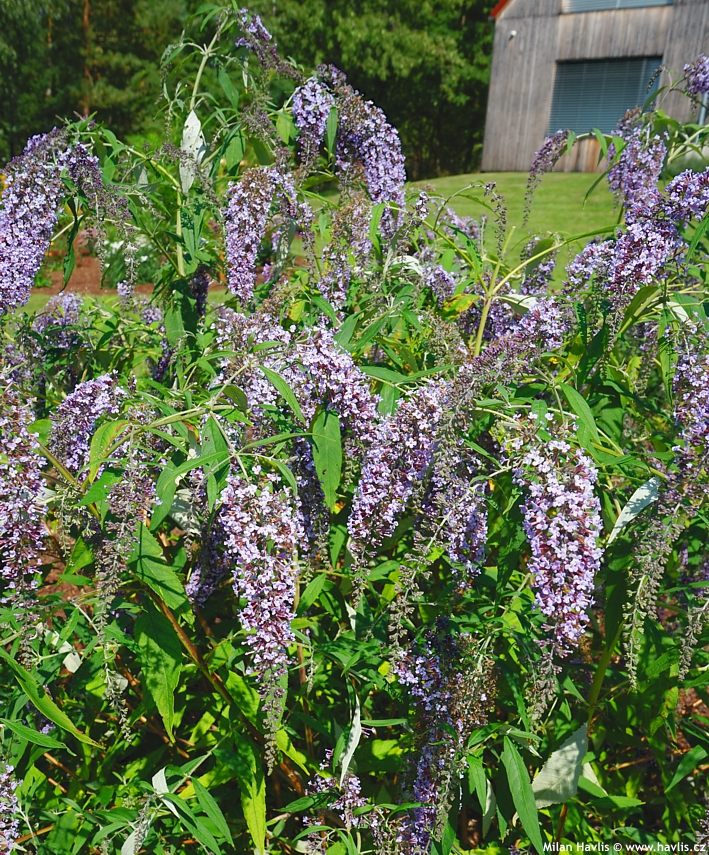
Wisteria Lane is a butterfly bush with unusually cascading branch tips and a wealth of large, generous flower clusters forming long, pendulous panicles up to 22 cm long and about 6 cm wide. They are strongly fragrant, lavender‑purple in colour, and begin flowering in July; if you regularly remove spent panicles, the plant will continue producing new flowers until late summer. The deciduous leaves are opposite, 10�14 cm long, narrowly lanceolate, mid‑green above and conspicuously silvery beneath. The shrub grows at a moderate pace and, despite its slightly arching character, forms a firm framework of upright central branches to about one metre in height; only once it reaches this height do the branches begin to bend and create the cascading habit.
The patent states that it is a seedling from open pollination, so the exact parents are unknown. However, its appearance suggests that one parent is most likely Buddleja lindleyana, the only species in the genus with distinctly pendulous panicles that bend under their own weight. The silvery underside of the leaves corresponds to the influence of Buddleja fallowiana, while the flower colour and length of the flowering season are typical of B. davidii. Although the precise hybrid composition cannot be given, the combination of these traits indicates that Wisteria Lane arose within a broader hybrid group in which all three species played a role. The cultivar was bred by Hans A. Hansen (*1963) of Walters Gardens in Michigan, and since 2017 it has been protected under plant patent PP27833.
Last revision 06‑09‑2023; 05‑07‑2026
Buddleja davidii and its hybrids are among the most rewarding shrubs for sunny gardens, provided they have full sun, warmth and sharply drained soil that dries quickly. Their fleshy roots dislike waterlogging and winter wet, so a gravelly or sandy substrate, a raised position and moderate watering are ideal. They flower on the current season�s growth, so they are cut back hard in spring, usually to 20�40 cm of last year�s wood, which encourages strong branching and large inflorescences; removing spent panicles during the season further prolongs flowering. Feeding should be light, with an emphasis on potassium, and the greatest winter risk is not frost but moisture around the roots. In nature they are short-lived shrubs, but with good drainage and regular spring pruning they can thrive for many years, flowering from early summer into autumn.
Vigorous cultivars need more space, deeper soil and dry out more quickly, but they tolerate very hard spring pruning. Dwarf and compact cultivars have a finer root system, cope better with restricted space and are more suitable for larger containers, but even they require perfect drainage, winter protection of the container against freezing and summer protection against overheating (never black plastic). In pots, Buddleja generally needs a larger volume of substrate, more frequent feeding and careful moisture control. They are hardy to about �29 �C, but perform better in warmer regions. In colder areas, plant older specimens with well-ripened wood.