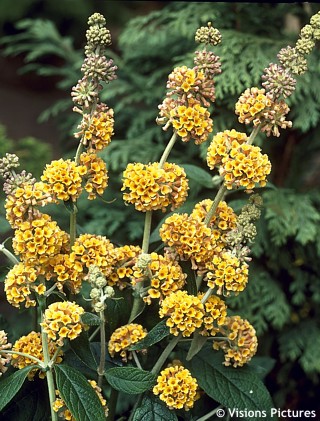











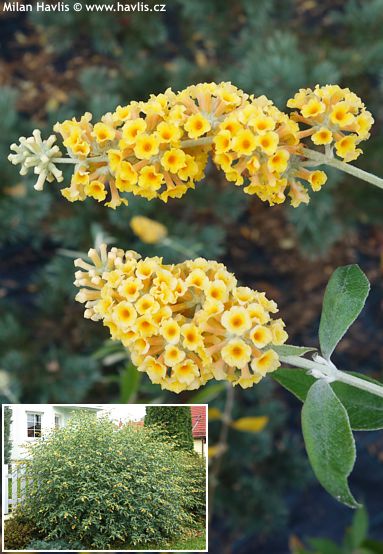
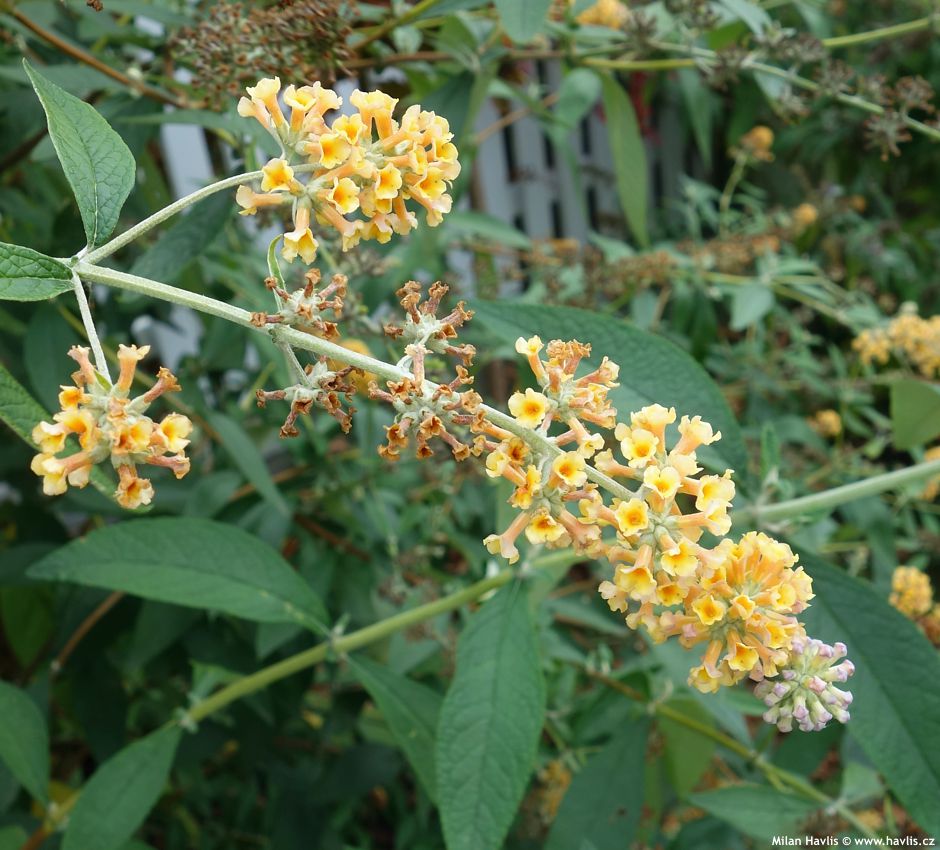
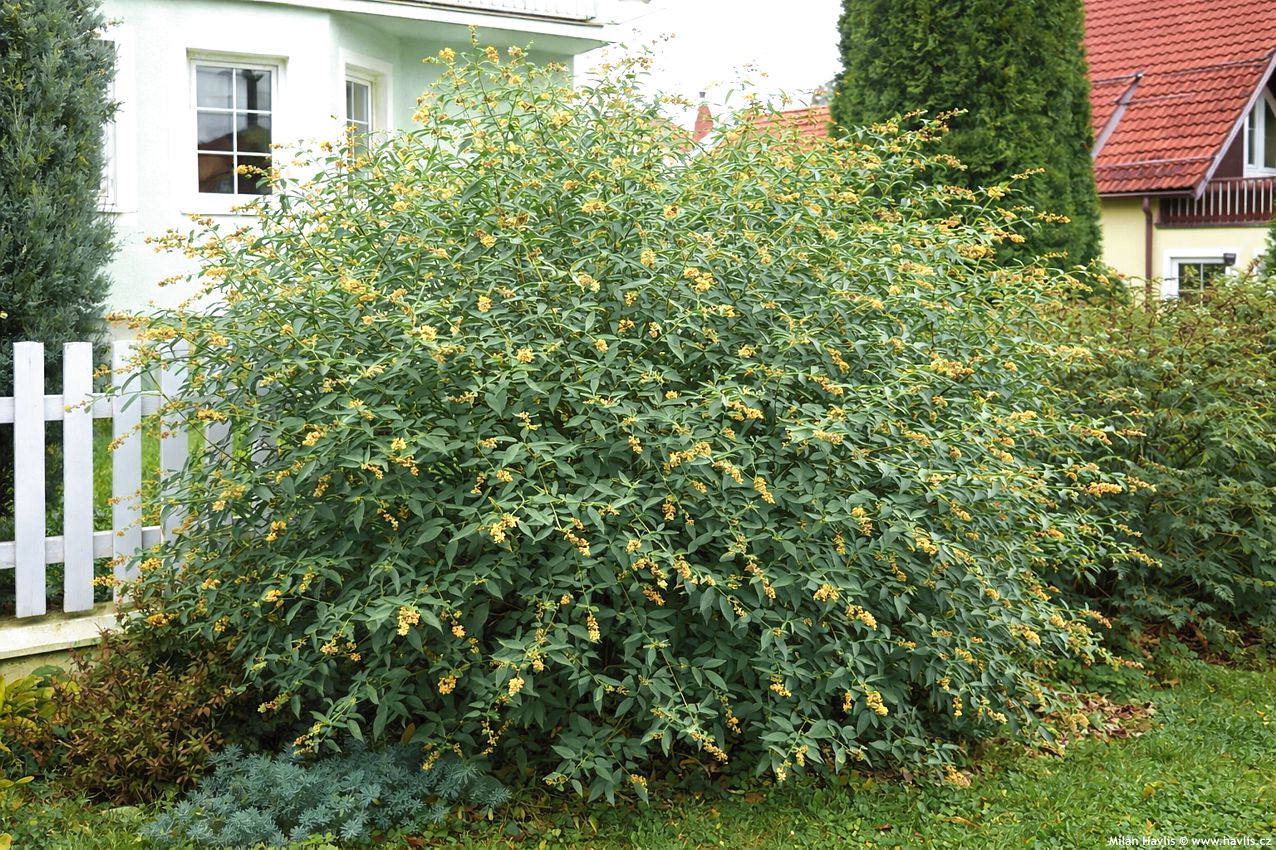
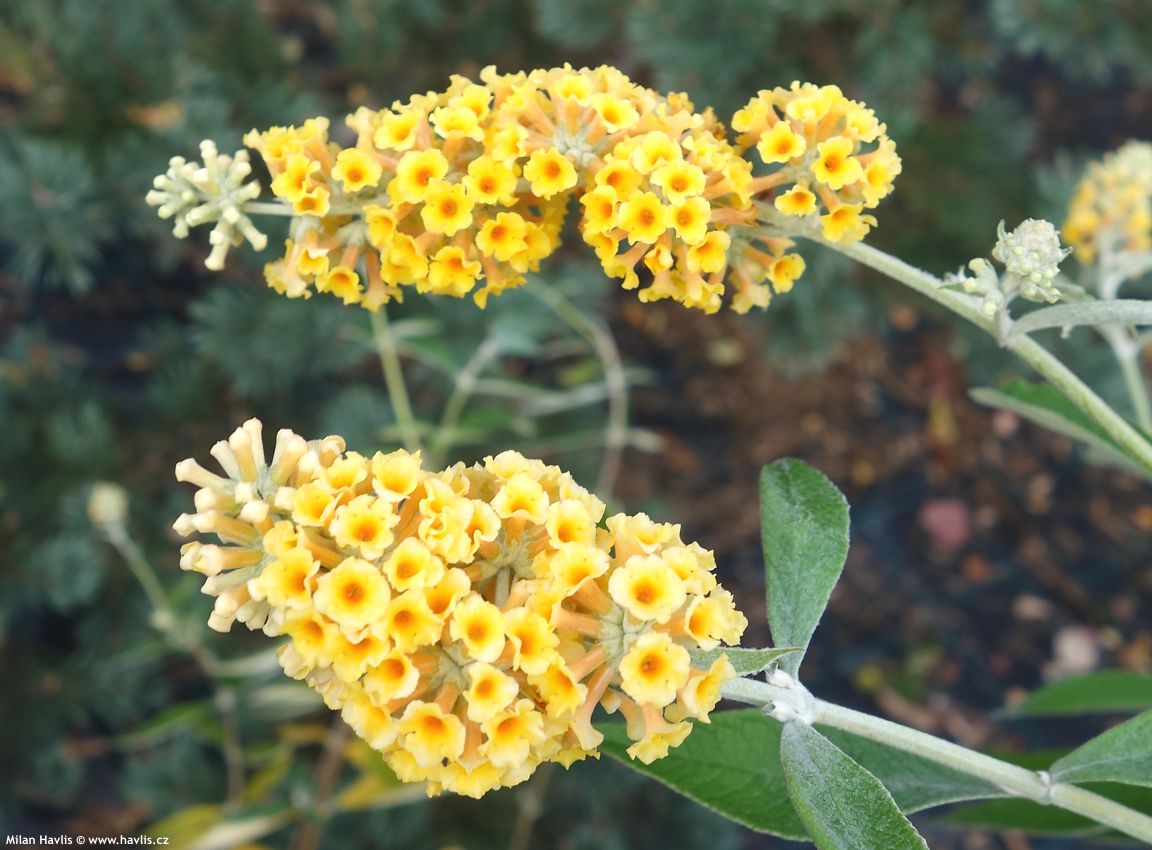
Buddleja × weyeriana 'HONEYCOMB' butterfly bush, buddleja

 Symbivit Tric (arbuscular)
 Symbivit (arbuscular)
Buddleja
The genus Buddleja, commonly known as butterfly bush, is a botanically diverse and geographically wide-ranging group of woody plants comprising more than 140 species distributed across Asia, Africa and both Americas. Having evolved on four continents, it shows remarkable variability, from small shrubs barely exceeding a metre in height to trees approaching thirty metres. Although now placed in the family Scrophulariaceae, its taxonomic history is complex � in the past it was assigned to Loganiaceae and even to its own family, Buddlejaceae, before modern systematics settled on the current concept. The genus was named by Carl Linnaeus (1707�1778) in honour of the English botanist Adam Buddle (1662�1715), following the recommendation of the physician and plant collector William Houstoun (1695�1733), who sent the first specimens of Buddleja americana from the Caribbean to England roughly fifteen years after Buddle�s death. Its ability to attract winged insects, especially butterflies, earned it the name �butterfly bush� in many languages during the twentieth century. Although no species is native to Europe, Buddleja has become one of the most widely grown ornamental shrubs here. The species differ not only in appearance but also in pollination strategy: American forms often developed long red flowers adapted to hummingbirds, whereas Asian species attract almost solely insects for which they have an abundance of nectar throughout the summer.
Buddleja � weyeriana originated at the turn of the 19th and 20th centuries in Gloucestershire, England, where John Christopher van de Weyer (1841�1910) experimented with crossing B. davidii and the South American B. globosa. It was a bold attempt � the two species come from different continents, have different inflorescence shapes, different scents and different growth rhythms � yet this very disparity gave rise to one of the most significant chapters in ornamental horticulture. Van de Weyer worked at a time when British gardens were enthusiastically embracing exotic plants, and butterfly bushes were then a novelty promising colour, fragrance and clouds of butterflies. The hybrid he managed to obtain combined the long panicles of B. davidii with the warm yellow‑orange tones of B. globosa, creating an entirely new type of buddleja with colours that had never existed in the genus before. The first plants spread quickly among collectors, and by the 1920s cultivars such as �Golden Glow� and later the famous �Sungold� had become icons of naturalistic gardens. Buddleja � weyeriana thus represents a botanical milestone standing between two worlds � the cool elegance of the European B. davidii and the sun‑soaked, honey‑scented warmth of the South American B. globosa � and its creation remains one of the loveliest stories in horticultural history.
Honeycomb is perhaps the softest and lightest butterfly bush variety within the � weyeriana group. Its flowers have a warm, creamy‑yellow shade with a gentle honey tint, giving the panicles the look of small honeycombs � the source of its name. The flower clusters are full, slightly rounded and composed of many small blossoms, creating a subtler effect than the deep yellow of �Sungold�. The shrub grows at a moderate pace and has a naturally airy, slightly tousled habit; the central branches are firm, while the outer shoots relax and the panicles bend gently under their own weight. The deciduous leaves are elongated, mid‑green and lightly silvery beneath, which enhances the pale tone of the flowers and gives the shrub a soft, almost velvety appearance. Honeycomb blooms from July to September and, with regular removal of spent panicles, continues flowering until the first cool days of autumn. The cultivar was introduced by John Christopher van de Weyer at Woodside, England, in 1927, the same year as �Sungold�, and from the outset it was valued for its gentler, creamy shade, which brings exceptional harmony to the garden.
Last update 17-09-2016; 05-07-2026
Buddleja davidii and its hybrids are among the most rewarding shrubs for sunny gardens, provided they have full sun, warmth and sharply drained soil that dries quickly. Their fleshy roots dislike waterlogging and winter wet, so a gravelly or sandy substrate, a raised position and moderate watering are ideal. They flower on the current season�s growth, so they are cut back hard in spring, usually to 20�40 cm of last year�s wood, which encourages strong branching and large inflorescences; removing spent panicles during the season further prolongs flowering. Feeding should be light, with an emphasis on potassium, and the greatest winter risk is not frost but moisture around the roots. In nature they are short-lived shrubs, but with good drainage and regular spring pruning they can thrive for many years, flowering from early summer into autumn.
Vigorous cultivars need more space, deeper soil and dry out more quickly, but they tolerate very hard spring pruning. Dwarf and compact cultivars have a finer root system, cope better with restricted space and are more suitable for larger containers, but even they require perfect drainage, winter protection of the container against freezing and summer protection against overheating (never black plastic). In pots, Buddleja generally needs a larger volume of substrate, more frequent feeding and careful moisture control. They are hardy to about �29 �C, but perform better in warmer regions. In colder areas, plant older specimens with well-ripened wood.