










Carex morrowii 'ICE DANCE' Japanese grass sedge, Morrow's sedge

Carex
Ost�ice (carex) je velmi obs�hl� rod st�lezelen�ch i opadav�ch trav, kter� spojuje v�znamn� vlastnost, je� jim dala botanick� jm�no a prom�tla se i do �e�tiny � okraje jejich list� jsou toti� v�ce �i m�n� ostr�, podobn� jako precizn� na�ezan� listy kancel��sk�ho pap�ru. Ost�ic je v�ce ne� 1500 druh� (modern� prameny hovo�� ji� o t�m�� 2000) a objevuj� se prakticky ve v�ech klimatick�ch z�n�ch od hork�ch trop� a� po arktick� oblasti, kde se mimochodem jedn� o jednu z nejv�znamn�j��ch skupin fl�ry, kter� je schopn� p�e��t v tak nehostinn�ch podm�nk�ch. Li�� se velikost�, barvou, ���kou listu, kveten�m i stylem r�stu � n�kter� jsou trsovit�, jin� se rozr�staj� a dok�ou vytvo�it nepropustn� p�dn� pokryv. V�t�ina ost�ic v�etn� t�ch, kter� jsou dom�c� i u n�s, se p�irozen� nach�z� na vlhk�ch a� mokr�ch stanovi�t�ch, co� je vcelku paradox, proto�e mnoho z nich v�born� zvl�d� dlouhodob� sucho, pokud nejsou na oslun�n� lokalit�.
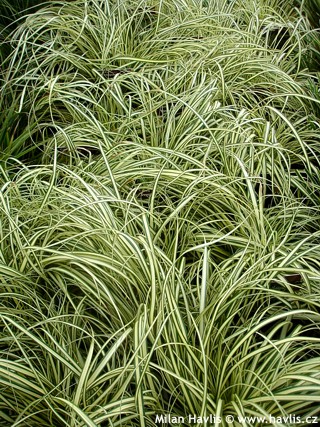
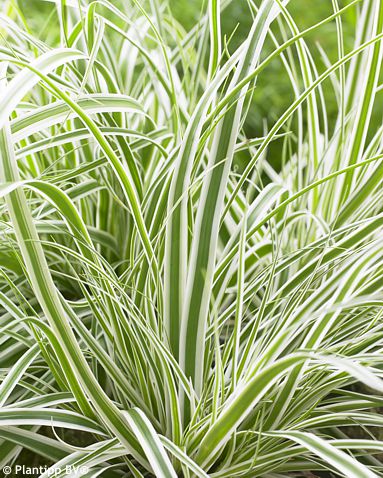
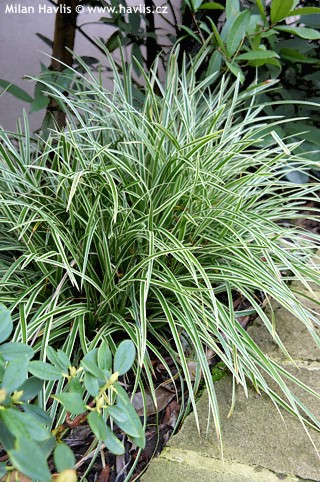
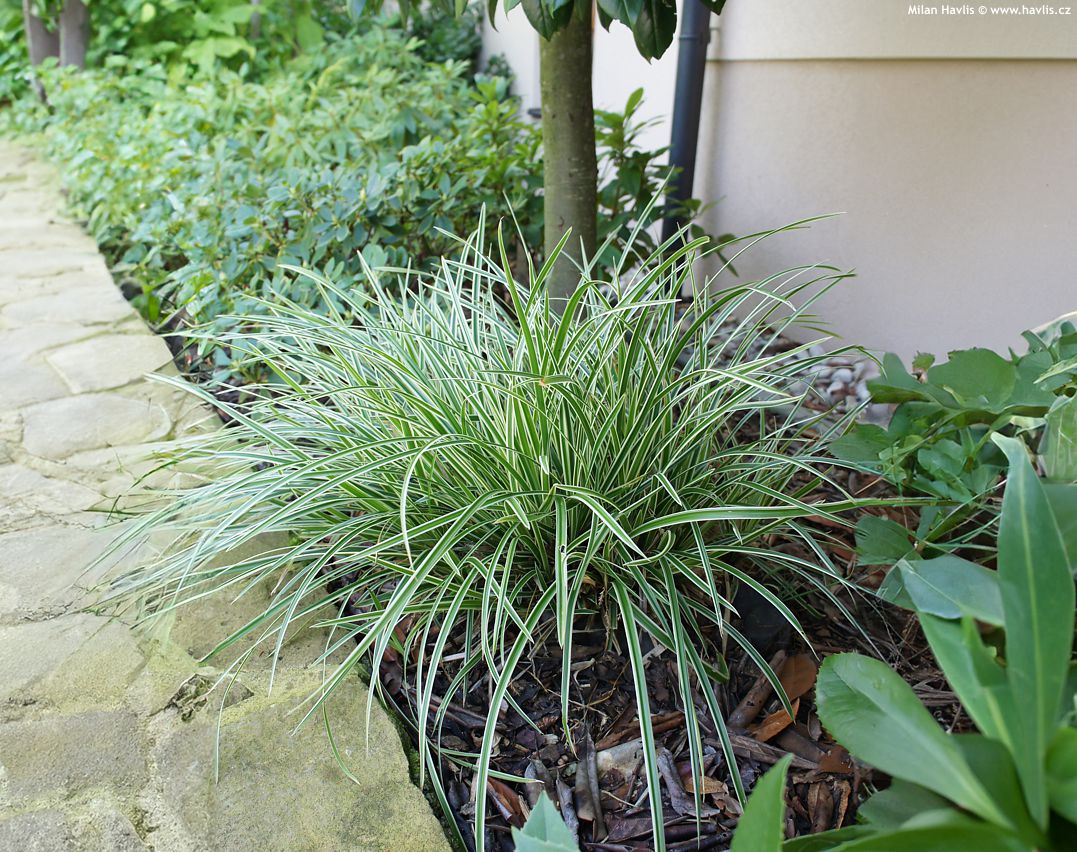
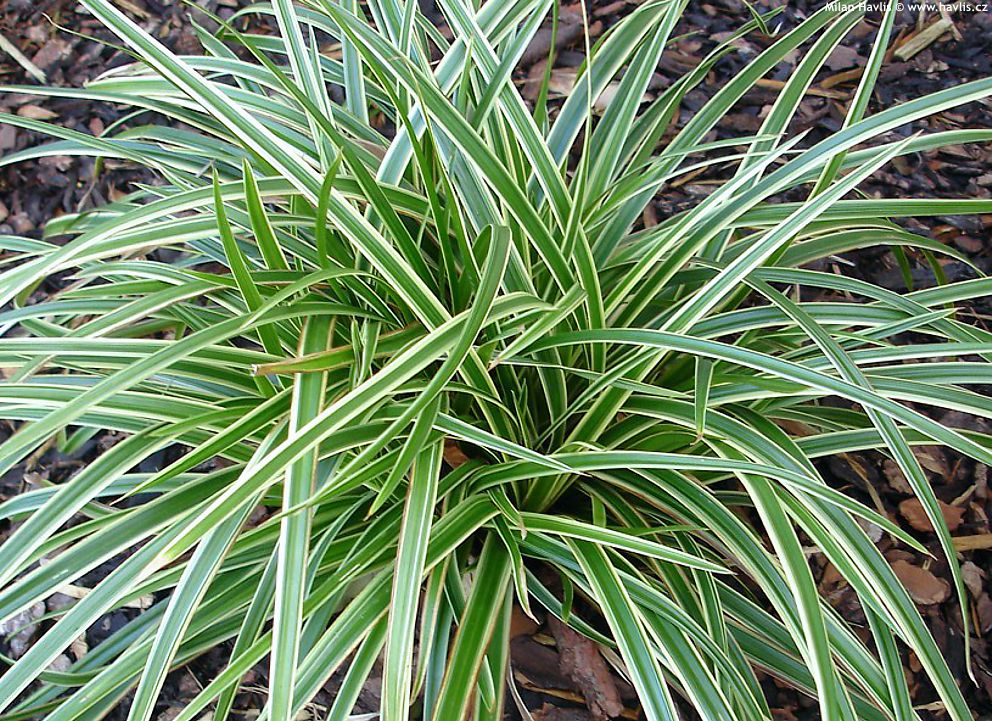
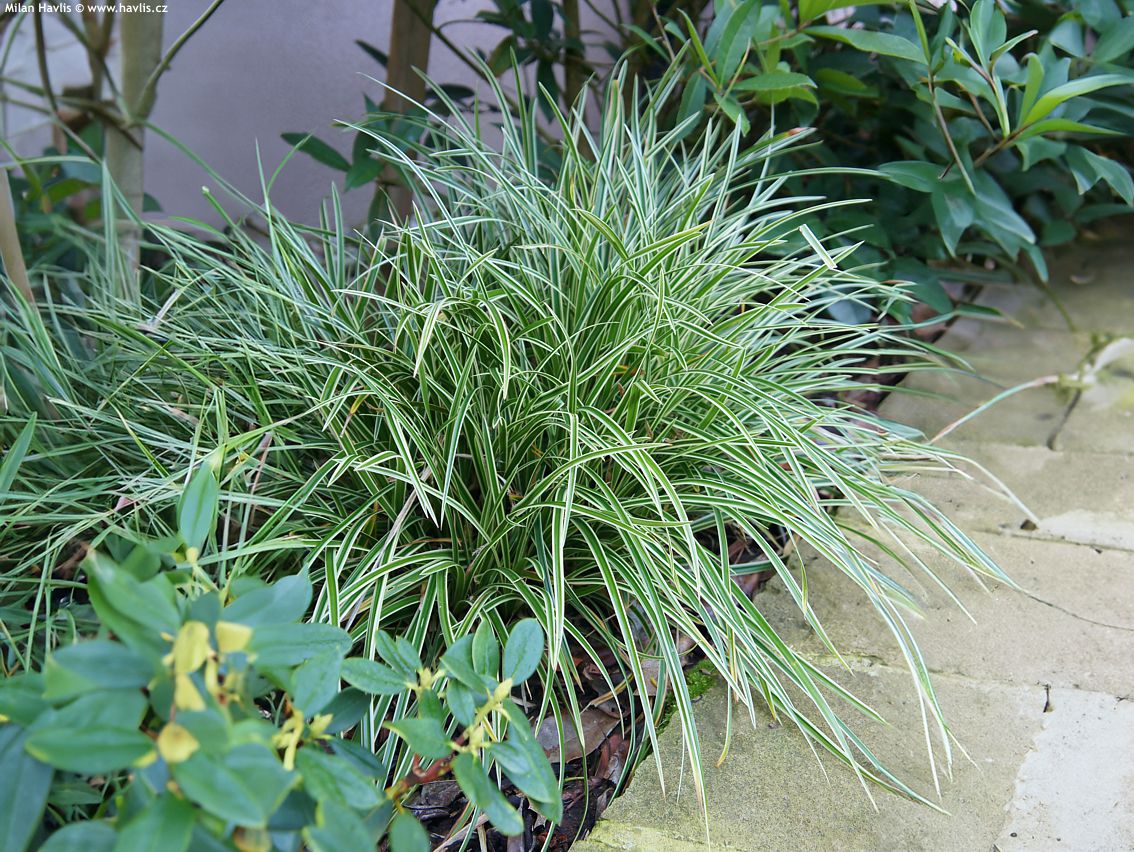
Japanese grass sedge is an evergreen species of ornamental grass native to central and southern Japan. Ice Dance is one of its key varieties proved by decades of cultivation. It boasts rather wide (up to 1.5 cm) leaf blades that are erect, stiff, leathery, sharp, 30-40 cm long, deep green in the centre and off-white at margins. From mid to late spring appear inconspicuous flowers on thin stems. Ice Dance forms dense and compact, symmetrical clumps which slowly spread forming a nice ground cover, yet not being invasive.
Last update 22-01-2008; 28-11-2023
Evergreen sedges cultivated in zones 4 to 8 are usually low-maintenance plants requiring no extra care once established. Though, removing its foliage after winter will enhance brand new, fresh green growths if old leaves are unsightly. Otherwise, they are often used for landscapes where neglect is expected. They prefer part shade to shade but grow in full sun, too, if regularly watered. Avoid extremes of wet and dry conditions. Ice Dance prefers moist to wet ground, humus-rich soil, and semi-shade or deep shade, especially in winter in borderline locations of its hardiness. It can take long spells of summer drought once established. Fully hardy to -29 �C (USDA zone 5) and suitable for outdoor pots.