










Digitalis purpurea 'CAMELOT ROSE' common foxglove

 Symbivit Tric (arbuscular)
 Symbivit (arbuscular)
Digitalis
Common foxglove is a European native and is found marginally in our country, too. Its flowers are so attractive that breeders keep hybridizing them and every now and then they introduce a new, improved variety. These improvements usually involve not just pretty flowers, but mainly the plants� life span � in the wild common foxglove is a biennial which needs one whole year for plant maturation to produce flowers the year after. No one is so patient today, therefore, new varieties are hybrids eliminating the waiting part so they either flower in their first year or they behave like clumping perennials without a need for self-seeding.
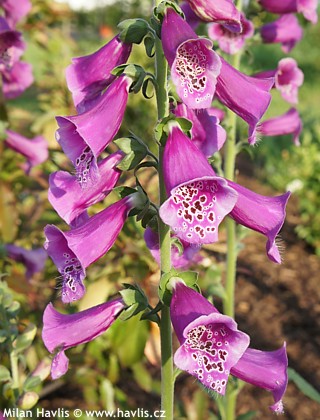
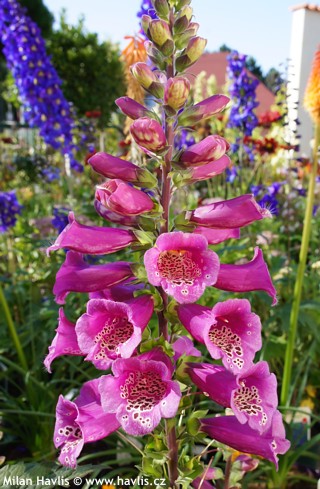
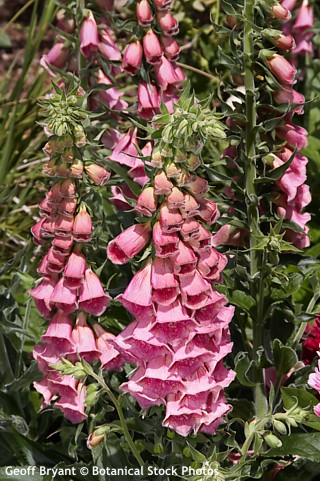
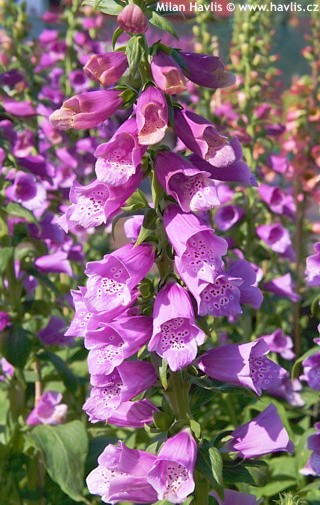
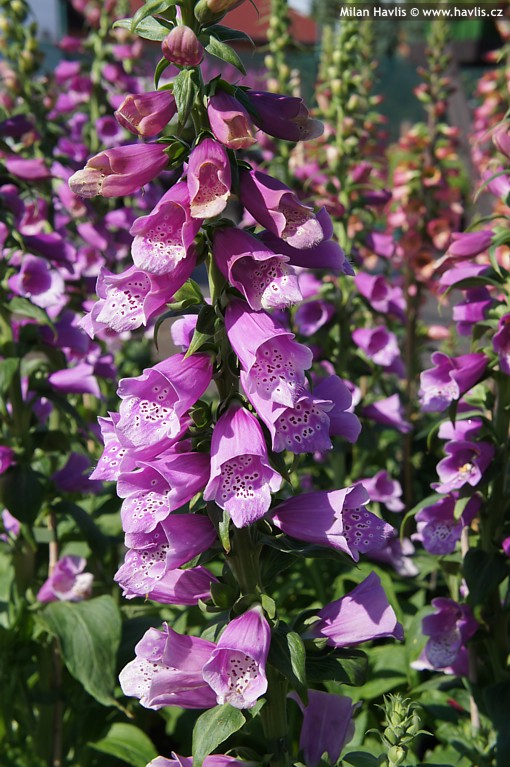
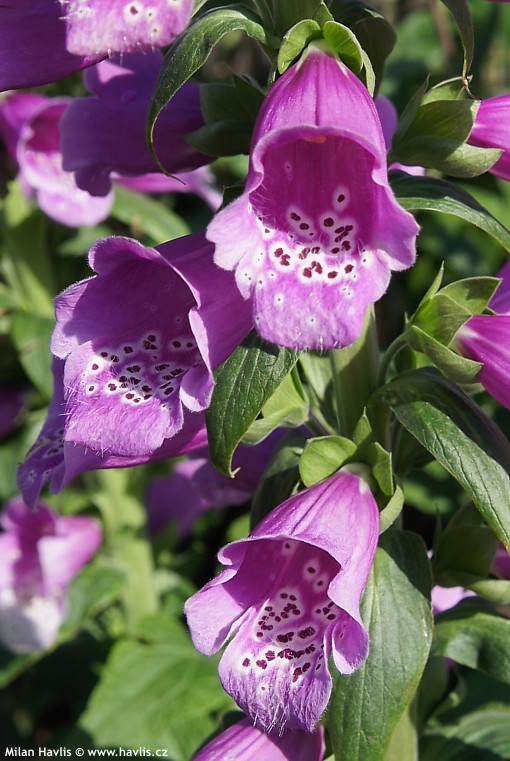
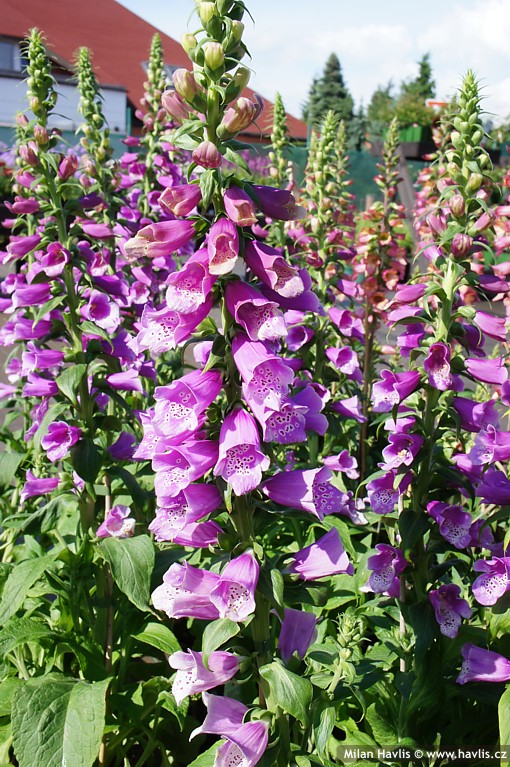
Camelot is a beautiful series of common foxglove offering attractive flowers on strong plants. Camelot Rose produces large, rosy pink to light purple red flowers on about 80 cm tall, sturdy stems. They are decorated with rich burgundy red dots with white margins. Blooming begins in June and continues until late July from numerous side shoots. Apply liquid fertilizer every 2 weeks to enhance flowering.
Leaves are large, broadly lance-shaped, mid green, toothed at margins, and hairy. Foxglove is a medical plant but also quite toxic. Despite the fact that it doesn�t make any fruit-like looking berries that would attract children it is not recommended for mass plantings near playgrounds, school yards, or kindergartens.
Common foxglove is a European native that is found marginally in our country, too. It is a short live perennial or a biennial that needs to self seed to produce new plant in the following year. It is best to leave the main stem flower till the very top and only when there are no more buds cut it in half, leaving some seeds at its bottom ripen and self seed in autumn.
Last update 27-05-2014.
Foxglove will grow in almost any soil apart from too wet or too dry. In the wild it is found in humus-rich soils in light woods and its margins, which means that it will love partial shade in your garden, or full sun if kept moist. Excess fertilizing may result in production of enormous leaves but no flowers. Hardy to about -34 �C (USDA zone 4).