










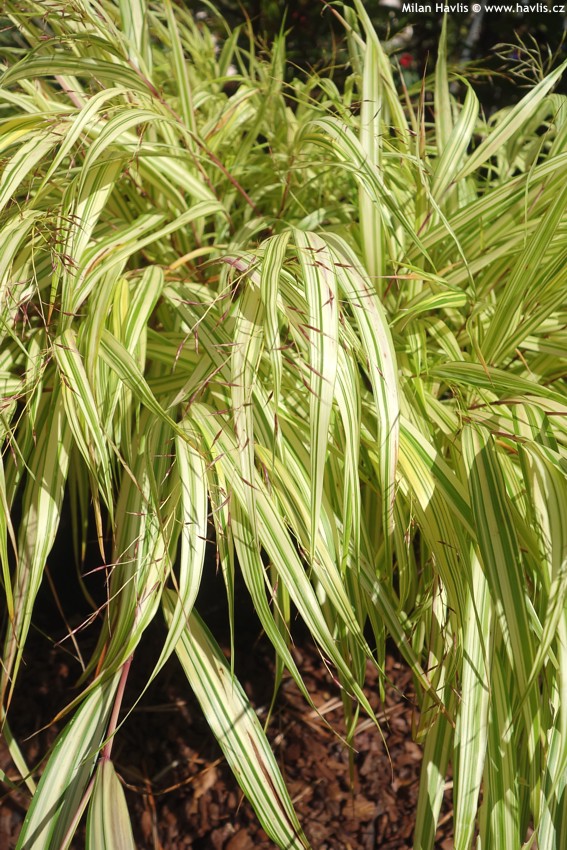
Hakonechloa macra 'AUREOLA' Hakone grass, Japanese forest grass

 Symbivit Tric (arbuscular)
 Symbivit (arbuscular)
Hakonechloa
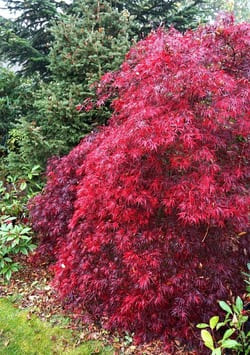
Hakone grass is one of the top grass species most appreciated by landscape designers. It is so showy and simple at the same time, so no wonder it is often used as undergrowth of larger beautiful Japanese maples or other appealing multistemmed shrubs with bare framework of bottom branches.
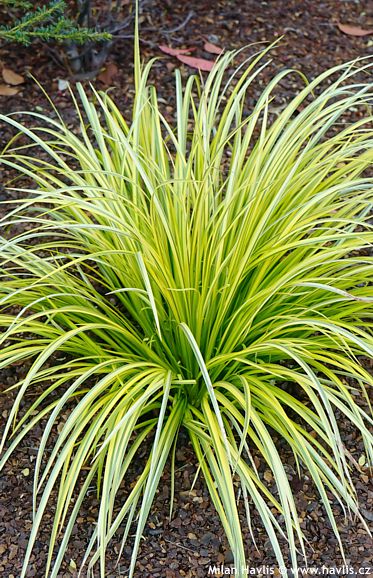
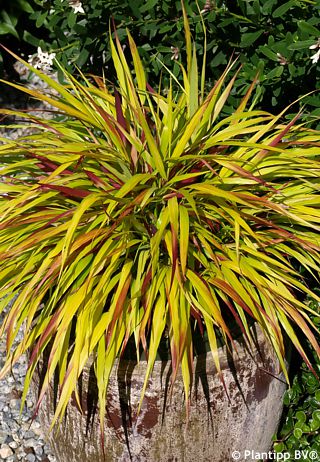
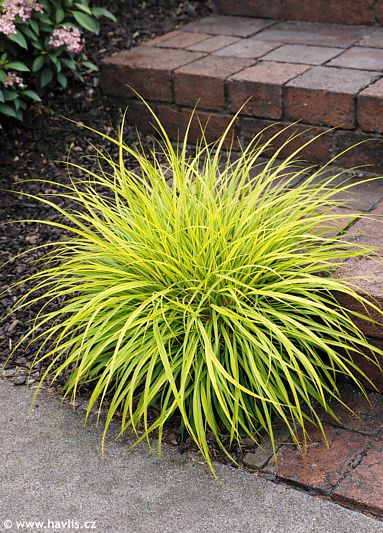
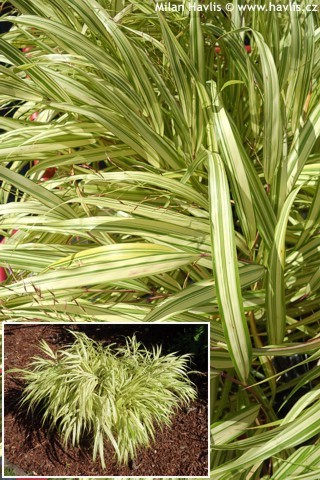
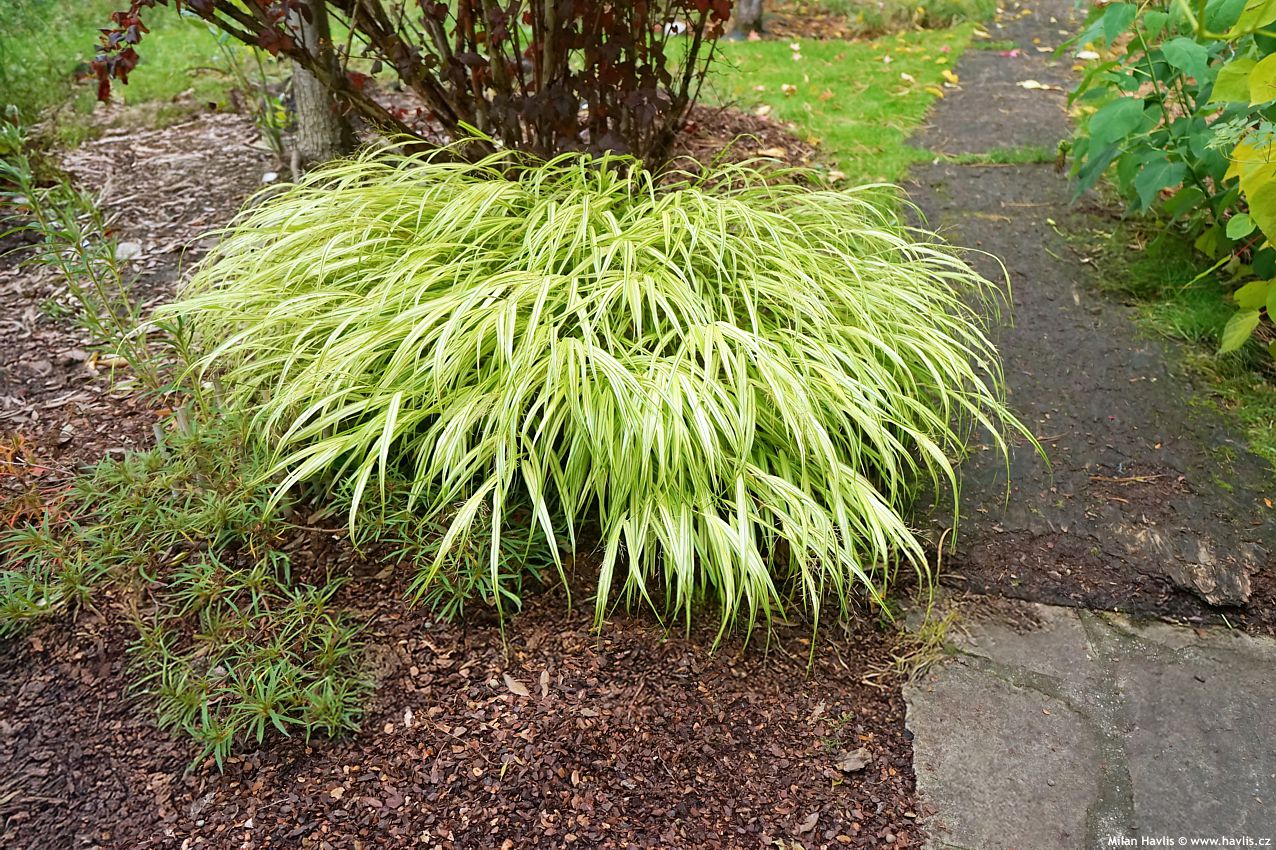
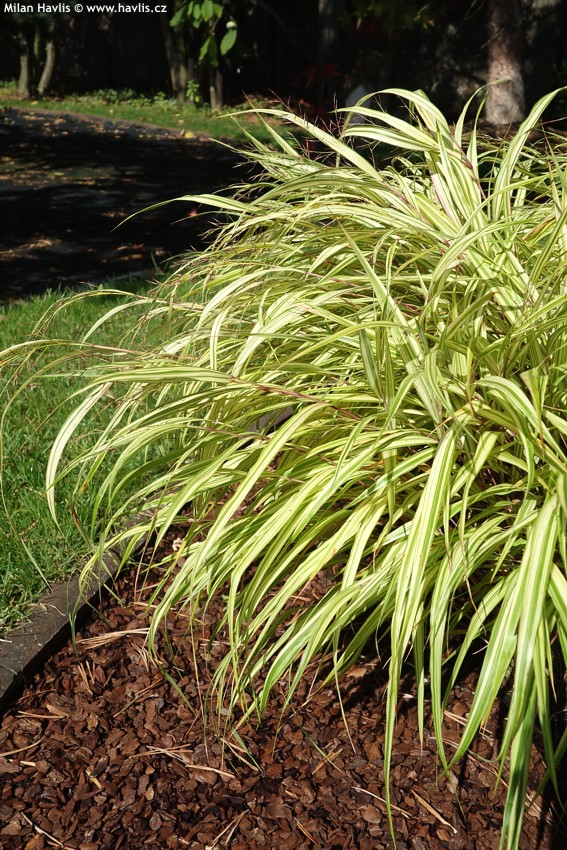
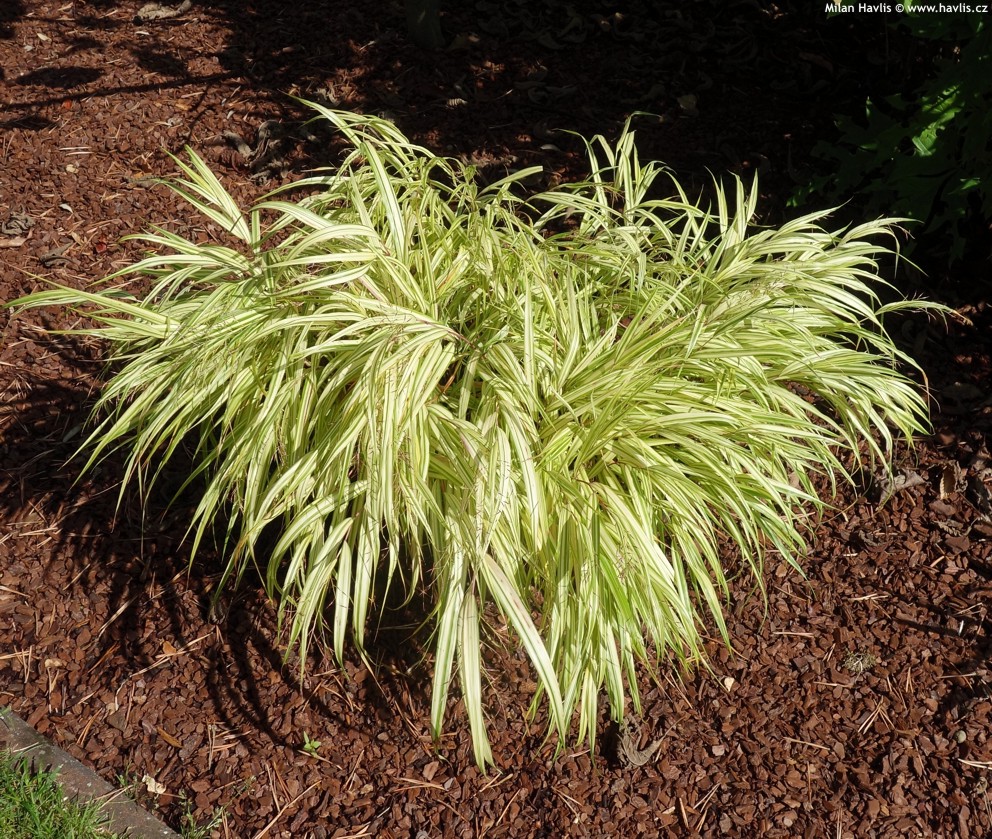
Aureola is a distinct hakone grass variety with variegated foliage. Its leaves have narrow stripes of banana yellow, pale green, and light butter yellow colour. They are only about one centimeter wide leaves and grow from slender, partly arching, pink flushed stems, reaching 30 to 60 cm height with age. In midsummer appear tan coloured, airy panicles composed of small flowers in terminal panicles, and last almost 2 months. In autumn leaves turn fantastic shades of pink and purple red. Tufts of this hakone grass will look great among dark green plants of different texture. Being similar to dwarf bamboos it is often used in Japanese style landscapes, and it is beautiful at ponds and around stones.
Though it is a spreading plant it does not spread too fast and for the best result it is suggested to use more (three) young plants for one square meter. Undesirable spreading can be controlled by heavy mulching foil placed above the areas where it should not grow.
Last update: 14-10-2018
Hakone grass needs constantly moist, humus rich soil or extra fertilizing during the growing season. Recommended generally for semi-shade locations or in filtered sun, it can grow in full sun, too, with adequate moisture. Always make sure the soil is free draining – it can take good frost but not wet roots in winter, nor water-logged ground in summer. Remove all stems in spring after all frosts just above ground level. It is hardy to about -29�C (USDA zone 5), and good for outdoor pots in partial shade with regular watering.