










Heuchera 'MARMALADE' coral bells

 Symbivit Tric (arbuscular)
 Symbivit (arbuscular)
Heuchera
Heucheras � coral bells are undemanding yet striking perennials that have gained popularity thanks to their beautiful foliage and delicate flowers, sometimes appearing in rich inflorescences. They form dense clumps of leaves with a breathtaking range of colours. The genus was named after Johann Heinrich von Heucher (1677�1746), a German physician and professor. It includes around forty species of perennial plants, mostly native to North America, except for H. sichotensis from the Russian Far East. To Europe, heucheras were introduced in the 18th century. their classification can be quite challenging as in the wild, these plants often crossbreed, and their flowers change shape significantly as they mature. That�s why so many breeders are drawn to them � their variable gene pool invites experimentation, and the thrill of discovering something new at the end of a breeding attempt is simply irresistible 😊.
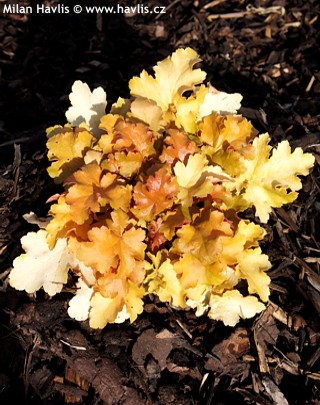
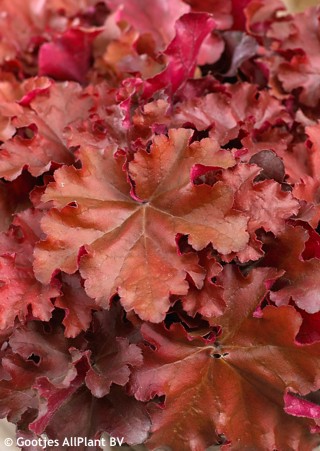
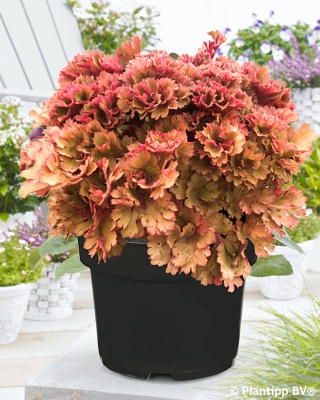
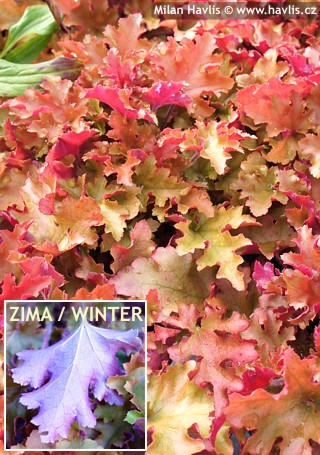
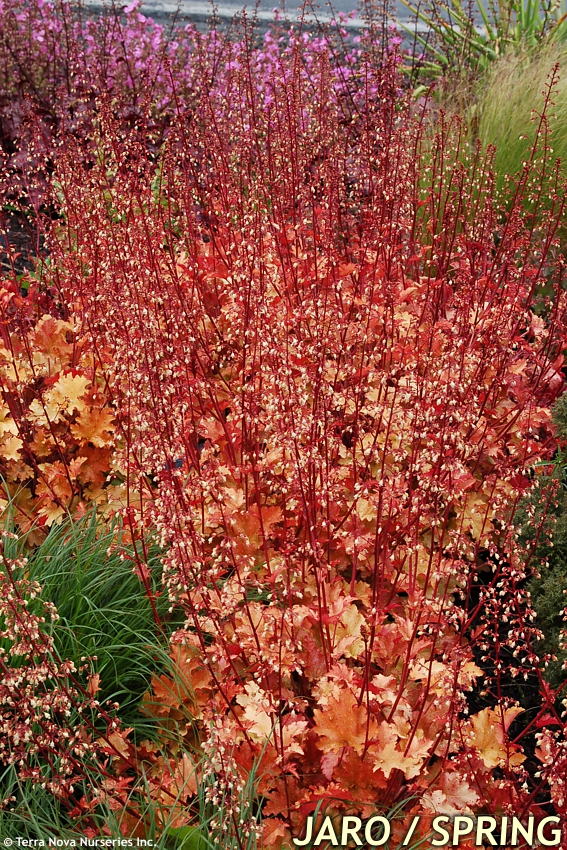
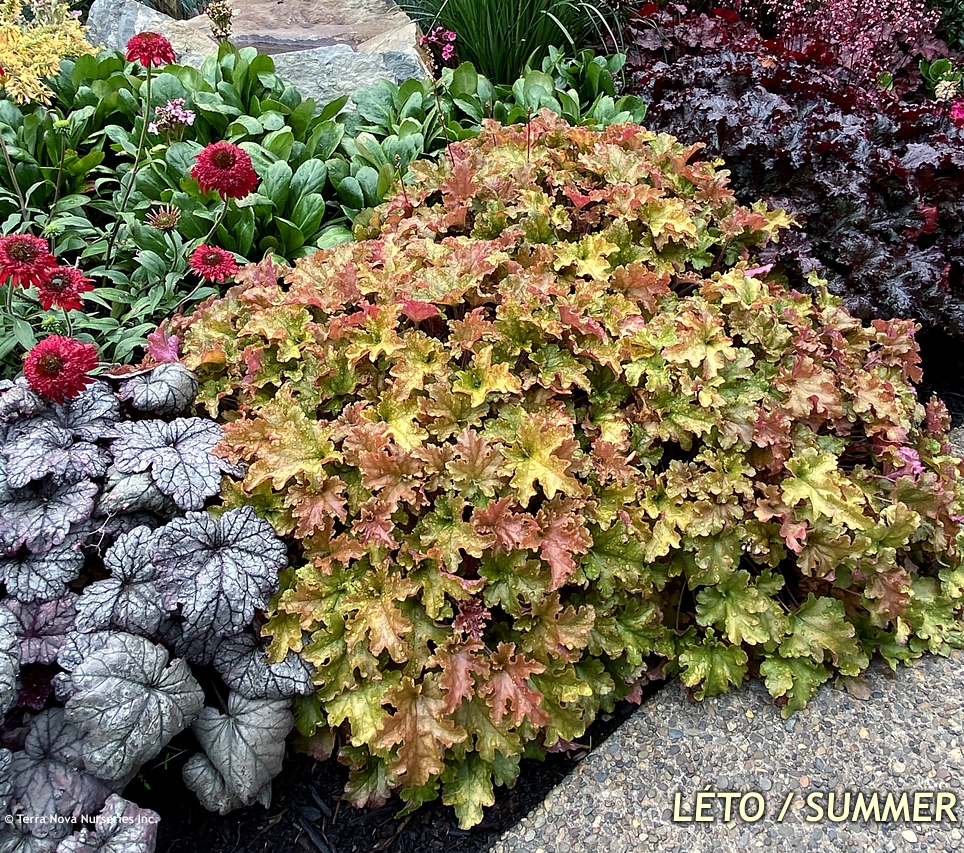
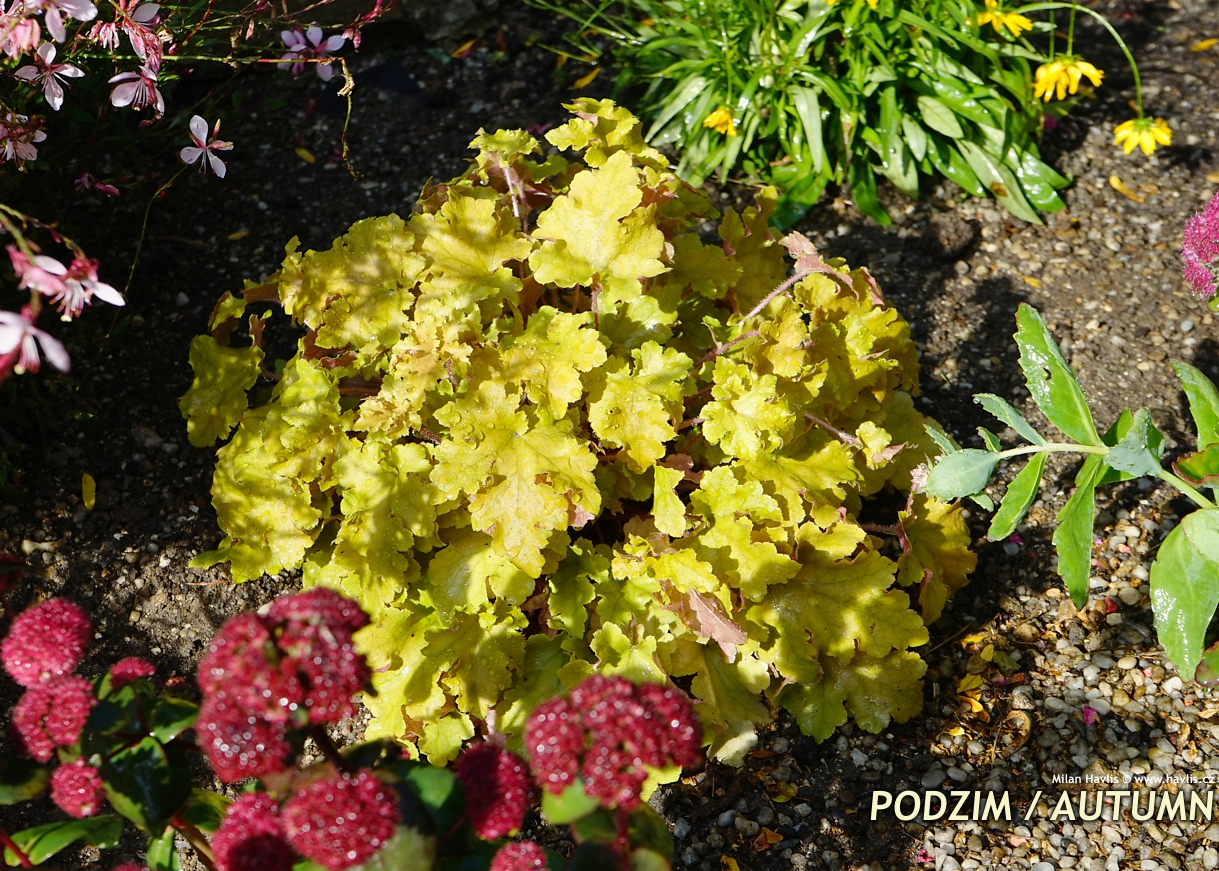
Marmalade, yummy! This coral bells variety looks tasty indeed. It emerges coppery orange in spring - looks like orange marmalade, and gains salmon pink shades throughout the season, mostly on the reverse of the leaves which in autumn and winter turns incredible violet purple, a stunning shade when it is -10�or -15�C all around. Leaves are mid-sized, heavily lobed and frilled at margins.
Last update 08-02-2016
In June and July small, creamy white, nor very showy flowers appear atop about 50 cm tall stems but if you think they spoil the image of the perfect leaves you can cut them off yet before they begin to bloom. The leaves remain nice and healthy throughout all winter if the temperature is mild, still, we suggest removing them all in early spring to encourage new growths. The cultivar was bred by Janet Egger of Terra Nova Nurseries in the United States and was introduced in 2002; it is protected by the US plant patent PP13 859.