










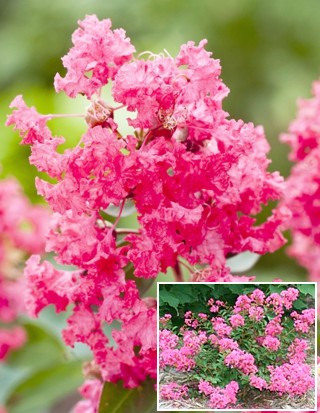
Lagerstroemia indica 'CORAL FILLI' crepe myrtle


 Symbivit Tric (arbuscular)
 Symbivit (arbuscular)
Lagerstroemia
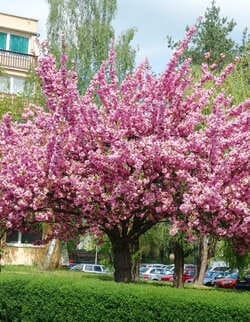
The genus Lagerstroemia comprises roughly fifty species distributed from India across Southeast Asia to Australia, a region where tropical monsoons alternate with dry periods and where woody plants have had to adapt to sharp fluctuations in weather. It belongs to the family Lythraceae, known to botanists for the exotic pomegranate and our familiar purple loosestrife: plants with conspicuous flowers. In English the genus is known as the crape myrtle, a name referring to the crinkled, crepe‑like texture of its petals and the myrtle‑like appearance of its foliage. The first European description of the genus dates from 1759, when Carl Linnaeus named it in honour of the Swedish merchant Magnus von Lagerstr�m (1696�1759). Lagerstr�m sent him plant specimens from his travels in Asia to Uppsala, then the centre of European botany, without realising that his name would one day be carried by one of the most beautiful ornamental trees of the subtropics. The most widespread species soon became Lagerstroemia indica, which, despite its specific epithet, does not originate from India but from China. From there it later spread to India, Persia and eventually the Ottoman Empire, where European travellers described it as �a tree with flowers like paper lace�, and gardeners gradually selected forms with increasingly showy and abundant blossom. Its cultural significance is considerable: in China it was planted near homes as a symbol of long life, in Korea as a tree of scholars, and in India as a plant of temple courtyards. What we today consider a crape myrtle in Europe and the USA is in fact the result of over two centuries of botanical exploration, travel stories and breeding experiments that began with a single parcel of herbarium specimens sent to Uppsala.
While crape myrtles were a common part of ornamental vegetation in Asia, Europe long struggled to understand their climatic requirements, and early attempts at cultivation ended with frozen shoots and disappointment. Europe received mainly botanical specimens of the wild form of L. indica, which were less attractive and far more sensitive to cold than the garden forms grown in Asia. Whereas Asia had cultivated selected garden forms for centuries, Europe encountered primarily the natural appearance of L. indica, a modest plant with an open crown, thin shoots and flowers that bore little resemblance to today�s rich, foamy panicles. Nevertheless, it became the foundation of ornamental breeding because it tolerated urban conditions well and flowered readily in heat. Its weaknesses � susceptibility to powdery mildew, low cold tolerance and a somewhat untidy habit � led breeders in two directions: careful selection of seedlings showing better behaviour, and later deliberate hybridisation in search of �better� parents.
This is where the story of interspecific hybridisation begins, a process that transformed the crape myrtle beyond recognition. Crossing with L. speciosa produced larger flowers and a sturdier plant structure, but the real breakthrough came with L. fauriei, a Japanese species from the island of Yakushima, collected in 1956 by the American botanist John Creech (1920�2009). He noticed that the local plants grew in exposed sites battered by wind, rain and salty air, yet suffered neither powdery mildew nor winter damage. His colleague Donald Egolf (1928�1986) of the U.S. National Arboretum began crossing them in 1959 and laid the foundations of modern breeding, today known as the x egolfii hybrids. Egolf�s plants were the first to combine the beauty of L. indica with the resilience of L. fauriei, opening the way to today�s cultivars capable not only of surviving the colder winters of the temperate zone but also of gathering enough summer warmth to flower.
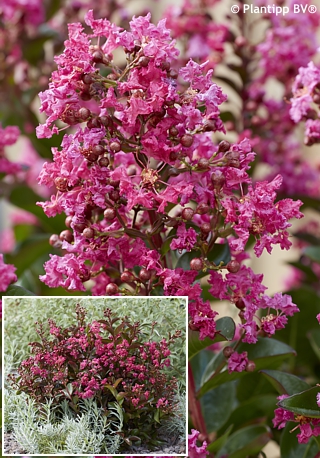
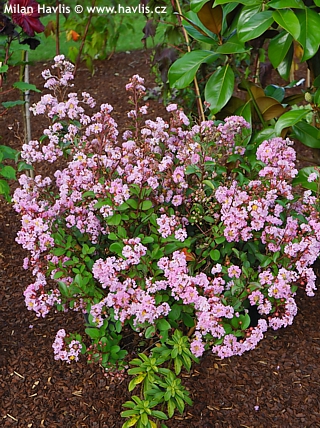
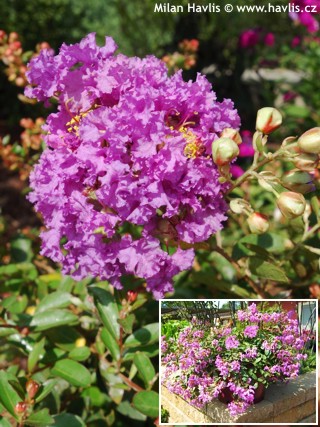
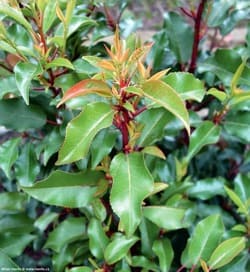
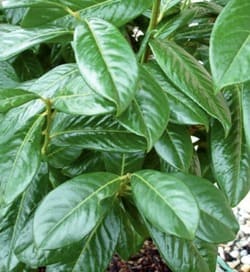
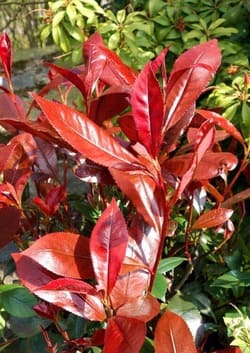
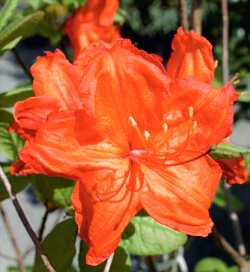
The Fleming brothers from Nebraska, USA, are those who brought some exquisite hardy hibiscus varieties. Also, they are responsible for this unique series of extremely hardy crepe myrtles called Filli, which took them almost 40 years to breed. In 1978 flowered for the first time Coral Filli with shorter panicles composed of beautiful, light coral pink, crepe flowers with yellow anthers. They come out from August until September. Deciduous leaves are elliptic to obovate, very glossy, green in summer and red in autumn. Unfortunately they are not resistant to powdery mildew and need to be treated. Filli crepe myrtle grows slowly, making a small shrub of only about half a meter tall and wide. Prune hard annually in spring. Patent No. PP14317 was issued in 2003.
Last update: 25-01-2019
Crape myrtles grow slowly in our conditions of continental Europe, with the exception of a few more vigorous cultivars, and thrive best in full sun, where they receive constant heat and no shade. The soil must be well drained, as the plant must not stand in heavy, waterlogged ground during winter; slightly acidic soil also enhances autumn leaf colour. Watering is important mainly in the first two years after planting, when they need consistently moist but never wet soil. Mature plants tolerate drought better but flower more abundantly if they have a steady supply of moisture, ideally through deep, infrequent watering. Mulch helps retain moisture and protect the roots: in summer it should be low so the soil can warm up, while in winter it should be high. Feeding is best done in spring with nitrogen to support growth, and from early summer with phosphorus to encourage flowering; late‑summer nitrogen is unsuitable because it produces soft, immature shoots that freeze easily.
Like most summer‑flowering woody plants, crape myrtles leaf out very late, often not until May, so do not worry if you see no signs of life during warm April days. They flower on young wood, which means pruning is done in spring, at the beginning of April. You can either cut back the entire shrub or tree to a firm framework, removing up to 80 per cent of the previous year�s growth, or encourage a multi‑stem form by selecting several strong shoots from the base and gradually removing side branches until the plant reaches the height at which you wish to form the crown. If severe winter damage occurs due to extreme frost, the shrub must be allowed to regenerate from the base, and most above‑ground parts should be removed, even if they show slight signs of life. Individual cultivars differ slightly in cold tolerance, but the basal parts and root system withstand at least �25 �C, which is typical for L. indica.