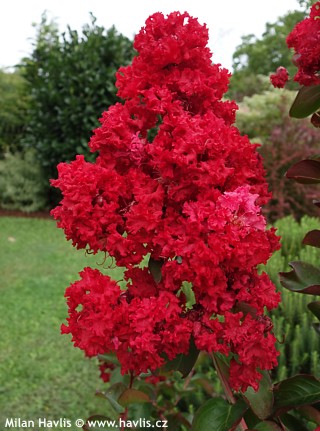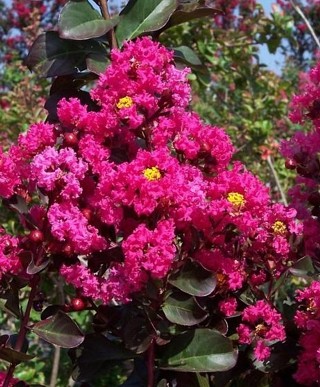











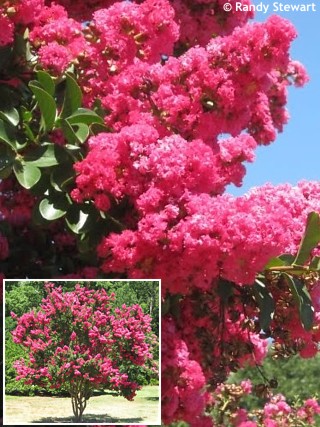
Lagerstroemia 'TONTO' crape myrtle


 Symbivit Tric (arbuscular)
 Symbivit (arbuscular)
Lagerstroemia
The genus Lagerstroemia comprises roughly fifty species distributed from India across Southeast Asia to Australia, a region where tropical monsoons alternate with dry periods and where woody plants have had to adapt to sharp fluctuations in weather. It belongs to the family Lythraceae, known to botanists for the exotic pomegranate and our familiar purple loosestrife: plants with conspicuous flowers. In English the genus is known as the crape myrtle, a name referring to the crinkled, crepe‑like texture of its petals and the myrtle‑like appearance of its foliage. The first European description of the genus dates from 1759, when Carl Linnaeus named it in honour of the Swedish merchant Magnus von Lagerstr�m (1696�1759). Lagerstr�m sent him plant specimens from his travels in Asia to Uppsala, then the centre of European botany, without realising that his name would one day be carried by one of the most beautiful ornamental trees of the subtropics. The most widespread species soon became Lagerstroemia indica, which, despite its specific epithet, does not originate from India but from China. From there it later spread to India, Persia and eventually the Ottoman Empire, where European travellers described it as �a tree with flowers like paper lace�, and gardeners gradually selected forms with increasingly showy and abundant blossom. Its cultural significance is considerable: in China it was planted near homes as a symbol of long life, in Korea as a tree of scholars, and in India as a plant of temple courtyards. What we today consider a crape myrtle in Europe and the USA is in fact the result of over two centuries of botanical exploration, travel stories and breeding experiments that began with a single parcel of herbarium specimens sent to Uppsala
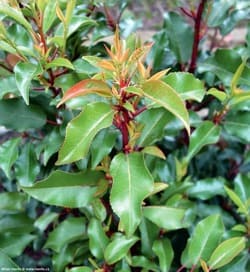
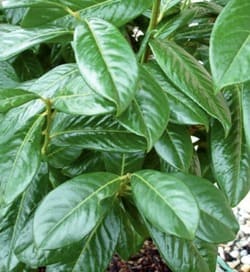
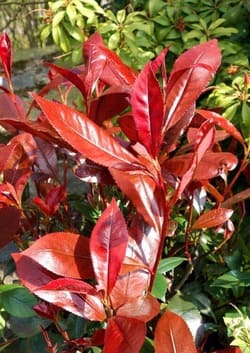
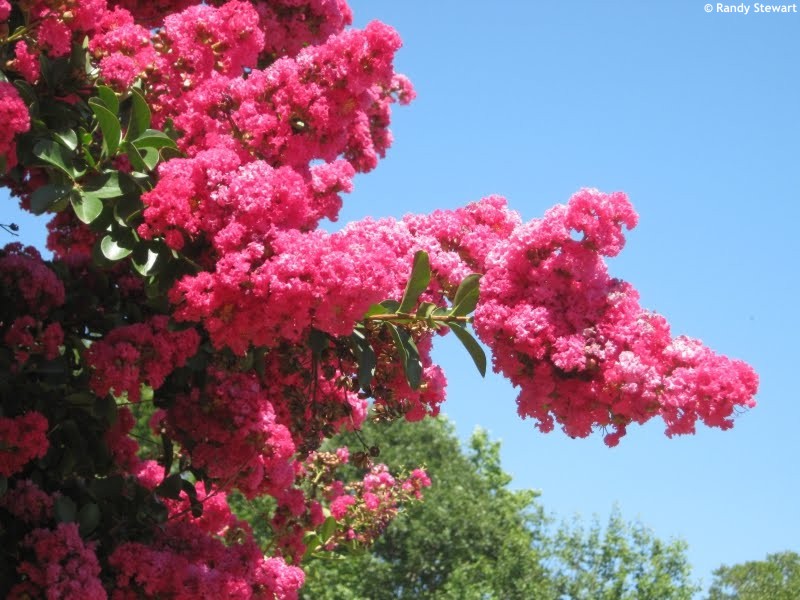
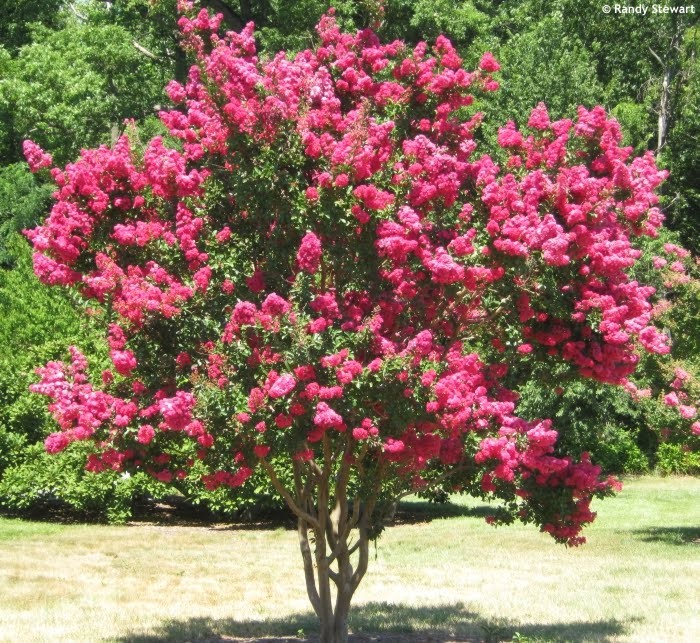
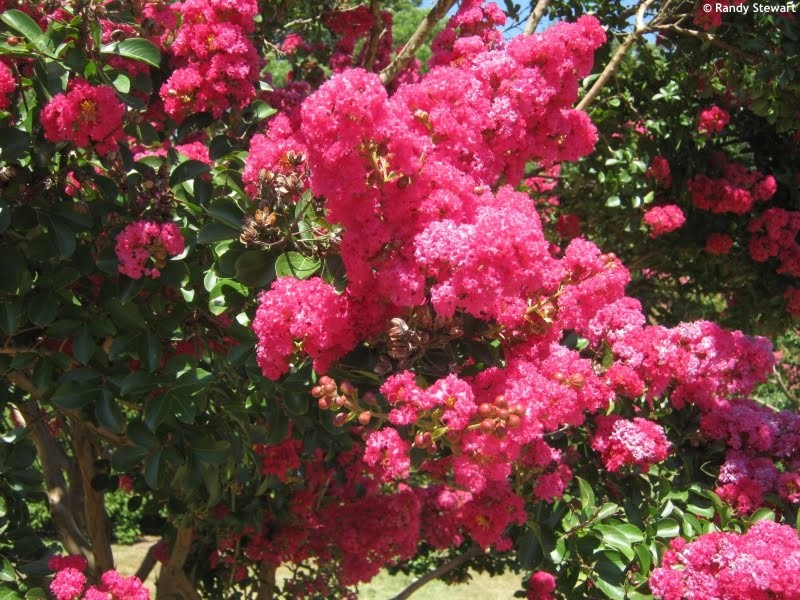
Tonto is one of four successful varieties of lagerstroemia (crape myrtle) are end results of Dr.Donald Egolf�s breeding programme which started in 1959. The plants show great colours and manifest better cold hardiness than the species. Tonto bears deep pink flowers with fuchsia red tones which in strictly acidic soil provides a red feeling in the flower colour. Flowers open from burgundy red buds. Deciduous leaves are 3-4 cm long, elliptic to obovate, very glossy, dark green in summer, turning red and maroon in autumn. When they fall down older plants reveal flaking-off bark, similar to what plane trees or stewartias do, leaving a mosaic pattern on the smooth trunks.
Last update: 05-02-2010; 13-01-2016
Crepe myrtles need little care. They need full sun with zero shade during the day. Grow them in well-drained soil that should be kept moist before the plant is fully established. If cultivated in acidic soil the plant will make fabulous colour play of autumn foliage. Crape myrtle needs heavy mulching in winter and some mulch in summer to retain moisture. Fertilize it in spring to encourage growth (nitrogen-based fertilizers), and in summer to encourage flowering (phosphorus-based fertilizers). Purple Magic has not yet been tested under all possible conditions but so far proved above ground (wood) hardy to about -18 �C, and root-hardy to about -24 �C.

.jpg)