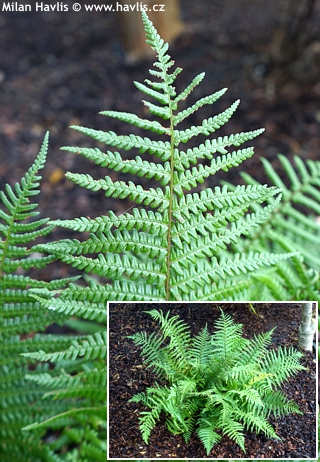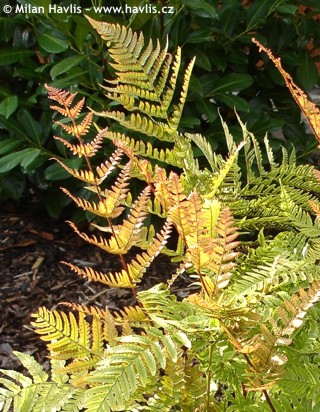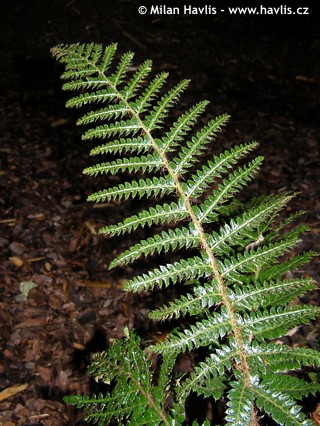











Polystichum tsussimense Korean rock fern

 Symbivit Tric (arbuscular)
 Symbivit (arbuscular)
Polystichum
The genus Polystichum is one of the largest and at the same time one of the longest studied groups of ferns. Botanists currently recognise around five hundred species, distributed almost worldwide, from the temperate regions of the Northern Hemisphere to mountainous areas of the tropics. The greatest species diversity is concentrated in East Asia, particularly in China and Japan. It was here that polystichums evolved over millions of years in relatively stable forest ecosystems, a fact indirectly supported by fossil finds of ferns with very similar frond structures dating back to the Tertiary period. The genus belongs to the family Dryopteridaceae, and its systematic delimitation represents one of the most complex chapters of fern taxonomy, as it includes numerous transitional forms, natural hybrids and apomictic species reproducing without fertilisation. The first formal description of the genus was published by Albrecht Wilhelm Roth (1757�1834) at the turn of the eighteenth and nineteenth centuries, at a time when European botany began to study ferns not only as part of the forest understorey but as an independent and evolutionarily remarkable group of plants.
The name Polystichum itself is derived from the Greek words polys and stichos, referring to the dense, regularly arranged rows of sori on the underside of the fronds. These are characteristic of the genus and, on closer inspection, appear almost surprisingly geometric. In the nineteenth century, polystichums became part of the phenomenon known as pteridomania, when ferns quite literally took over European gardens, glasshouses and interiors, and were collected with a passion more commonly associated today with orchids or succulents. Thanks to their evergreen fronds and ability to thrive in shade, many species entered garden cultivation before they had been thoroughly studied botanically. Although it might seem that a genus with such a long history has little left to reveal, modern molecular methods show that research into polystichums is far from complete, and that their relationships and the origins of individual species are still being reassessed.
Korean rock fern, Polystichum tsussimense, originates from East Asia, primarily from Japan and the Korean Peninsula. The species was named after the island of Tsushima, a forested island in the Korea Strait between Japan and Korea, where it was first discovered. It was scientifically described in 1901 by the Japanese botanist Tomitarō Makino (1862�1957), one of the key figures of modern Japanese botany, who devoted much of his work to the study of East Asian ferns. In its native habitat, Tsushima shield fern grows mainly in shady woodlands, on rocky slopes, in ravines and along stony forest paths, often close to boulders and rock faces. This close association with rocky yet sheltered environments is reflected in its common English name, Korean rock fern, which highlights both its natural habitat and its ability to thrive where many other ferns struggle.
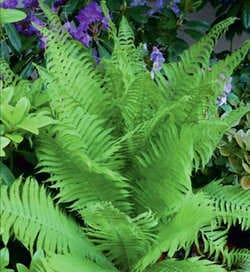
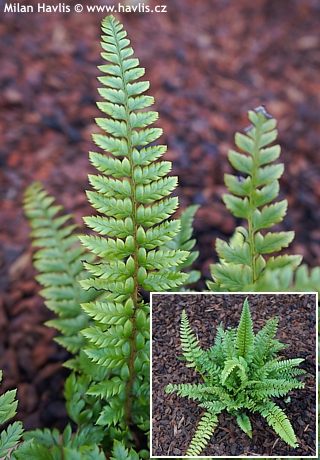
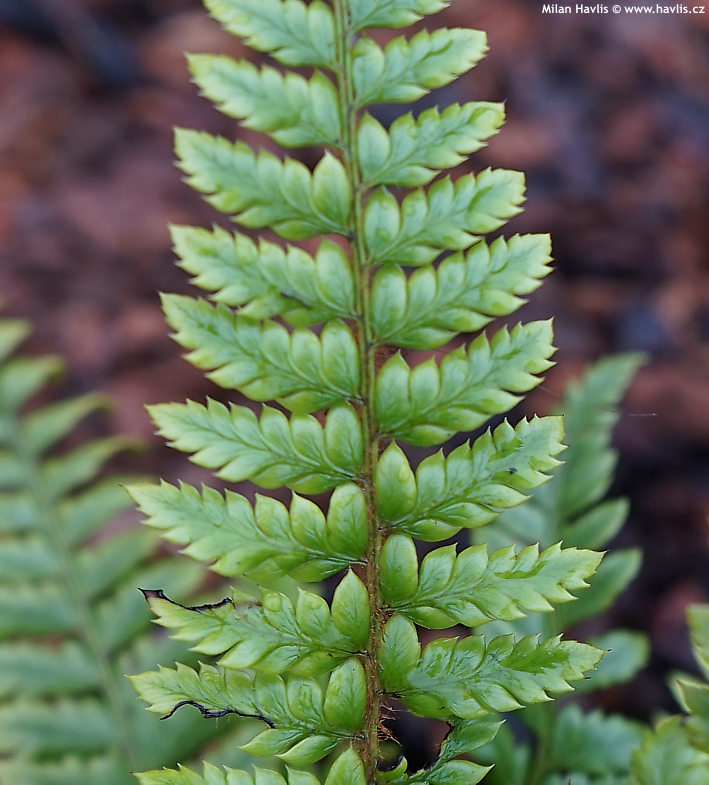
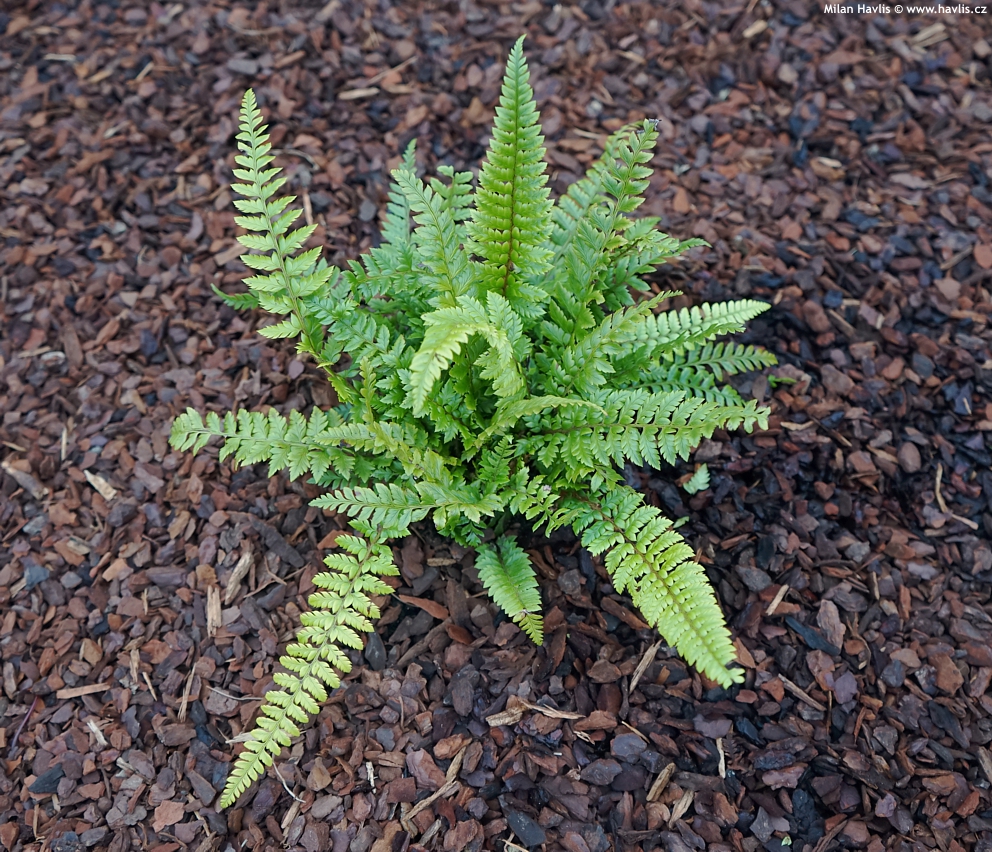
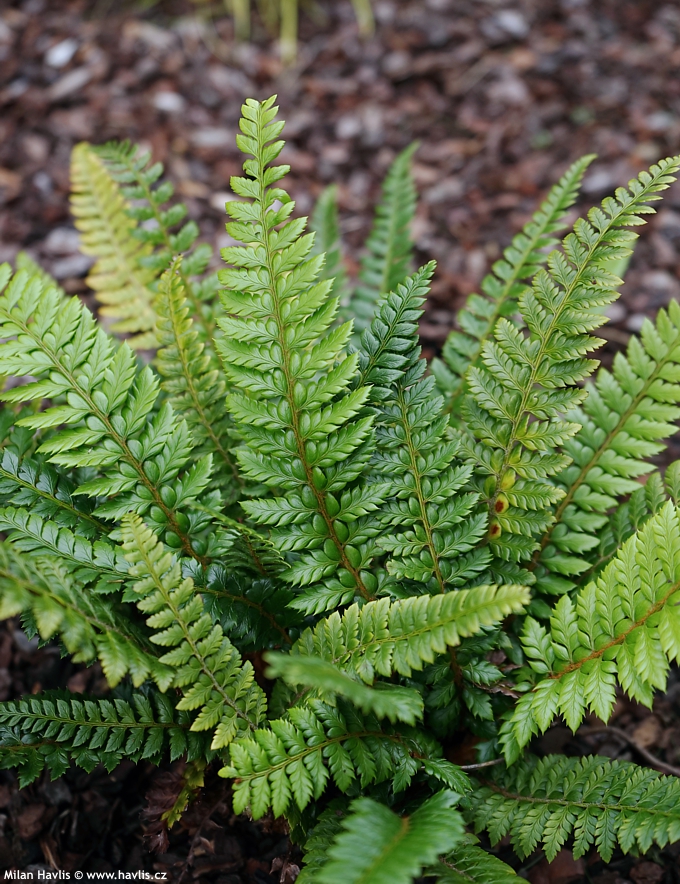
Korean rock fern is a reliable, evergreen species with a calm, balanced character, distinguished by its mid‑green, highly glossy fronds. Unlike most other ferns of the same genus, its fronds are not fully double‑pinnate. The individual segments are almost fused at the base, forming larger, lance‑shaped, finely cut leaflets that give the plant a neat and compact appearance. The fronds are firm, upright and usually 20 to 40 cm long. Together they form a small, dense clump with an attractive, funnel‑shaped habit that retains a tidy appearance throughout the year. Korean rock fern is an excellent choice for shady and semi‑shady sites, particularly in woodland settings, among stones, along low walls or in quiet corners of the garden, where its glossy texture, regular form and understated yet refined elegance can be fully appreciated.
Last update: 03-12-2020; 27-03-2026
Polystichums are woodland ferns suited to shade or partial shade, where they thrive in humus‑rich, well‑drained soil with a high content of organic matter and evenly maintained moisture. They are not sensitive to soil pH and grow well in mildly acidic to neutral conditions. They do not tolerate waterlogging or prolonged drought. An organic mulch of leaf litter or fine bark is beneficial throughout the year, helping to maintain stable moisture levels and soil structure. In ordinary garden soils, which lack the natural woodland microflora, the use of a mycorrhizal inoculant at planting is advisable, as it significantly supports establishment, stability and long-term vitality. Korean rock fern is commonly rated hardy to -23 �C (USDA zone 6) which seems to refer to foliage hardiness. Though it is allegedly root-hardy to almost -29 �C (USDA zone 5). In spring remove all withered and unsightly foliage to encourage formation of new, healthy leaves.