










.jpg)
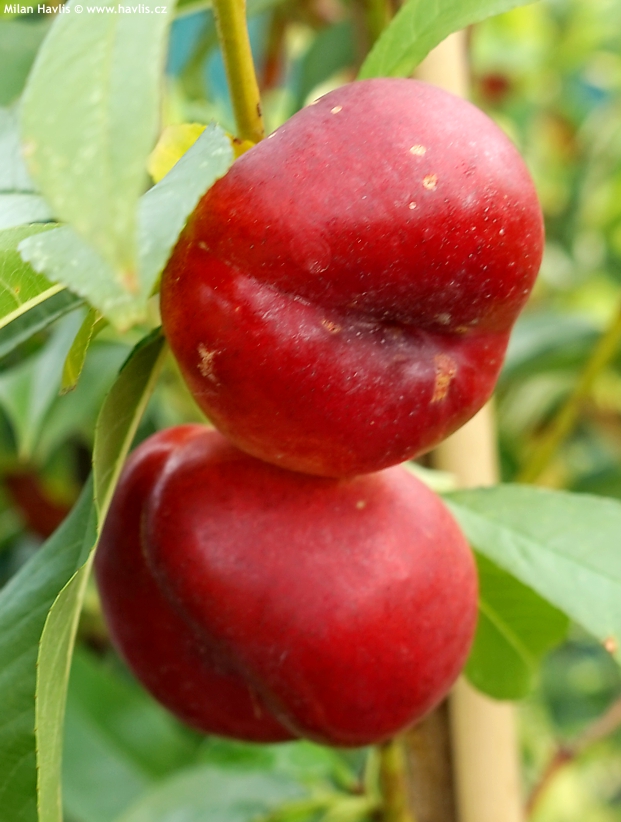
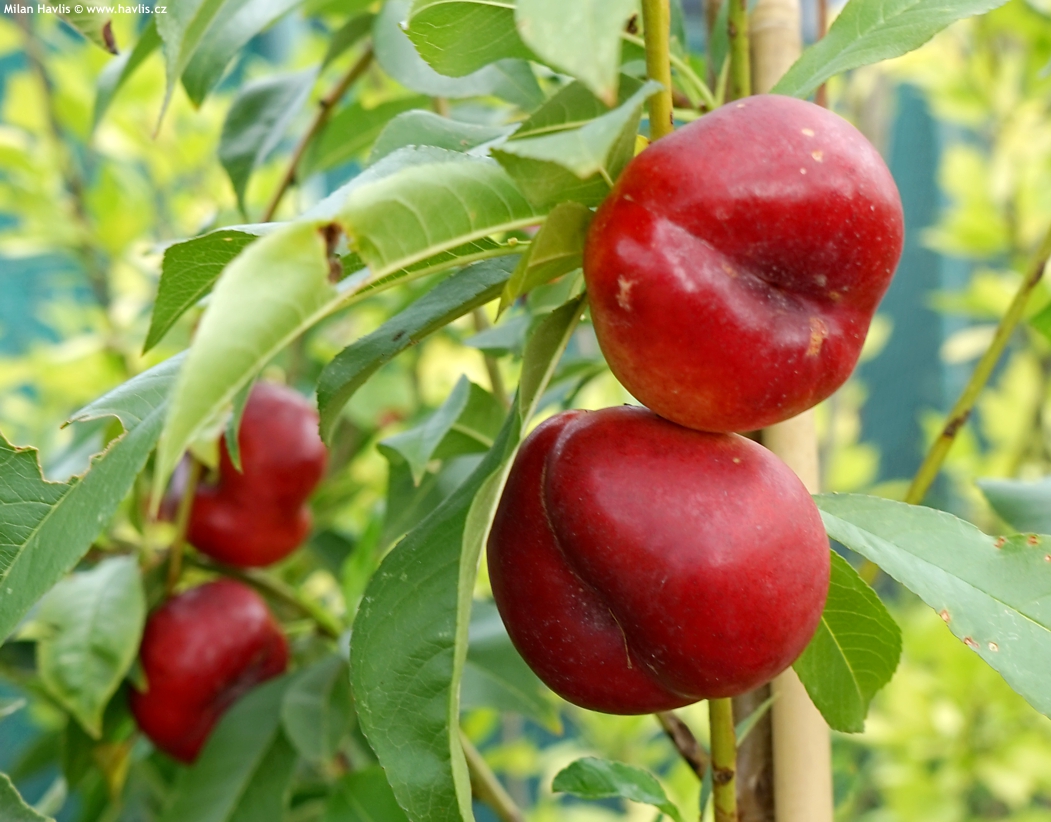
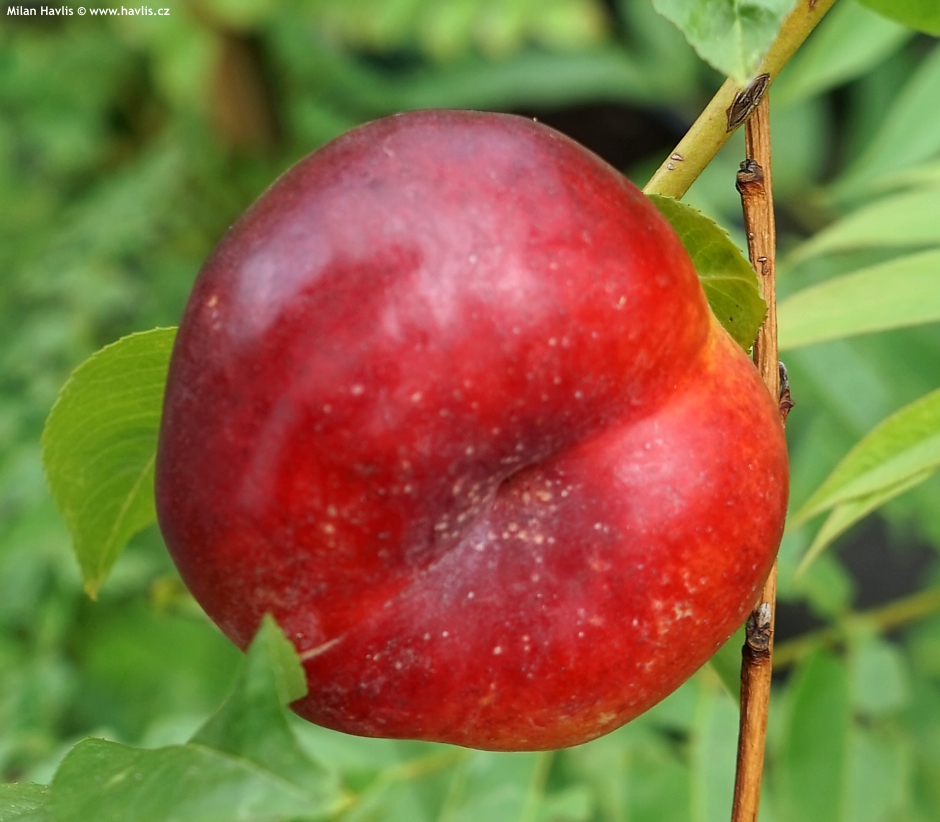
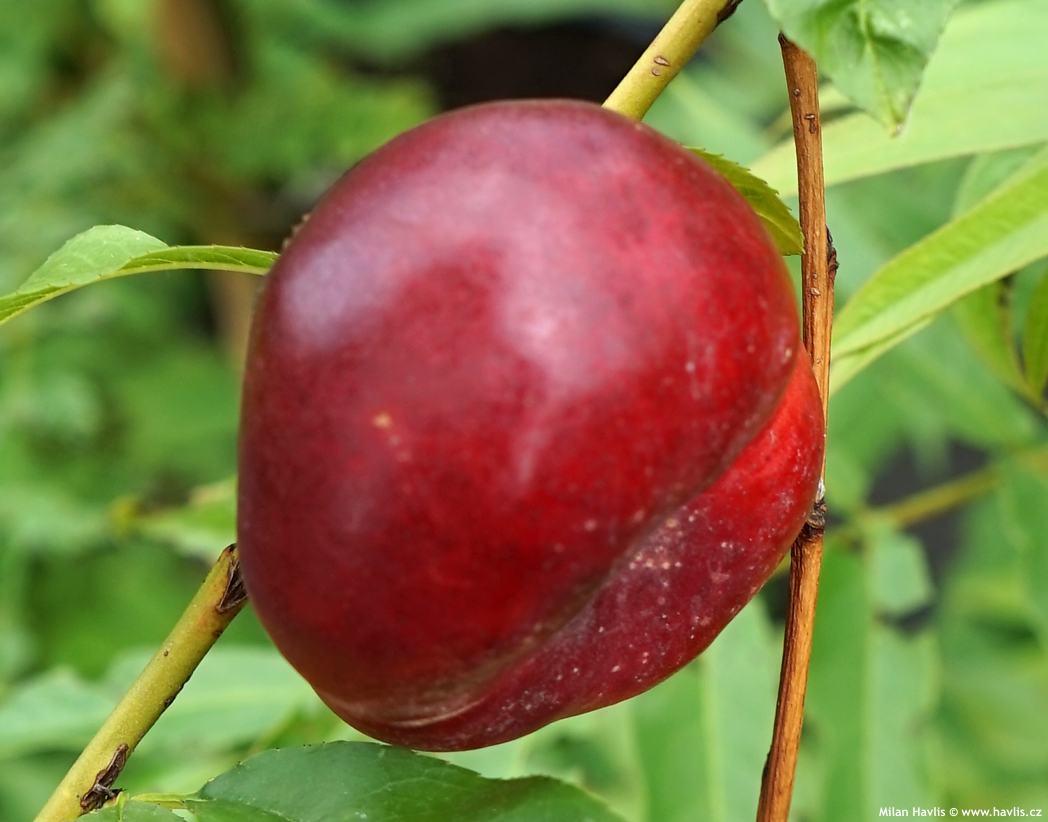
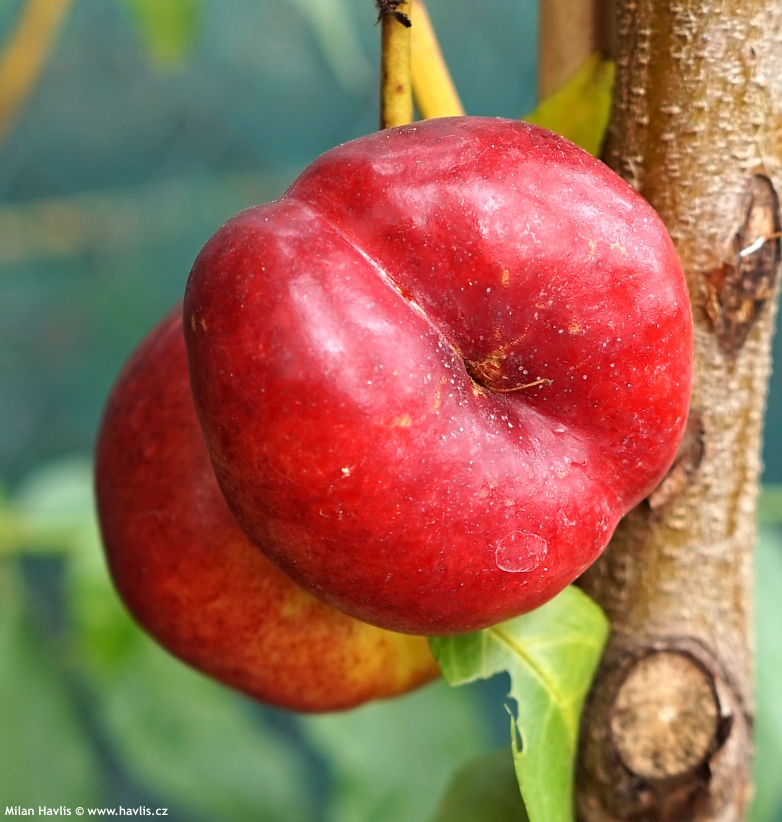
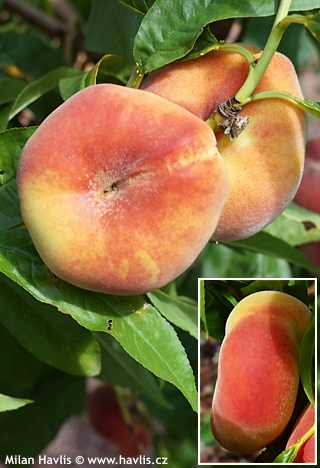
Prunus persica var. nucipersica platycarpa flat nectarine

 Symbivit Tric (arbuscular)
 Symbivit (arbuscular)
Prunus
Flat peaches and nectarines (platycarpa) are not officially recognized as cultivars, but rather a type that produces persica so-called flat peaches�or, in the case of the subspecies nucipersica, flat nectarines. In Czech botanical practice, they don�t yet have a specific name, while in English they already go by more than ten common names, including doughnut peach, UFO peach, and most often paraguayo. I once learned from a well-traveled pomologist that these are considered a wild peach type that naturally occurs in all regions where peaches grow freely. Traditionally known as mountain peaches, they originate from higher elevations than their round, bred counterparts.
According to historical records, the earliest mention of flat peaches appears in the 16th-century Chinese novel Journey to the West (by Wu Cheng'en), considered one of the four great classical works of Chinese literature. The story tells of the Jade Emperor asking King Wukong�who, inspired by Buddha, seeks immortality�to guard the orchard of flat peaches known as pantao. The king guards it so well that he ends up eating most of the fruit himself and attains immortality. This tree first arrived in the United States in 1871, imported directly from China.
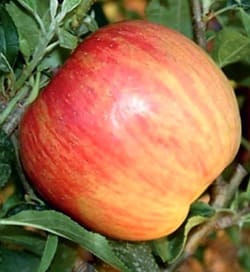
Flat nectarines are a gourmet treat among peaches and standard nectarines. They feature a flattened shape, smooth glossy skin that�s thin�meaning they can�t be stored long once ripe�and exceptionally sweet, juicy flesh. When fully ripe, the flavour evokes ripe mangoes. The pulp is very soft, either yellow or white, and clings tightly to the small pit. They typically ripen throughout August depending on the variety.
Cultivar names are often fictional and multilingual, which is why we prefer English descriptors based on fruit characteristics to distinguish individual trees more clearly: White Flesh (with white pulp) and Yellow Flesh (with yellow pulp).
Last update 02-12-2021; 02-08-2025
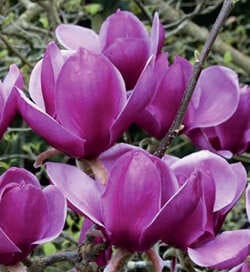
They are so easy to grow, and we have noticed that they are healthier and more vigorous than classic peach trees. They show great resistance to leaf curl unless in a peach orchard with this infection. Should it appear on your tree try to stay away from a chemical treatment and feed the plant. It will help it make new leaves and ill, curled leaves will fall off (remove and burn them). We suggest planting peach trees in open spaces so they can feel cold, spring breeze which will delay flowering and prevent the flowers from frost damage should they open too early. They like slightly alkaline soil, moist but well-drained. Do not transplant bare-root trees in autumn, only in spring. We do not recommend pruning but it may be done after flowering. The best yield is always from an unpruned tree which grows naturally. Hardy to about -29 �C (USDA zone 5).